 1 / 11
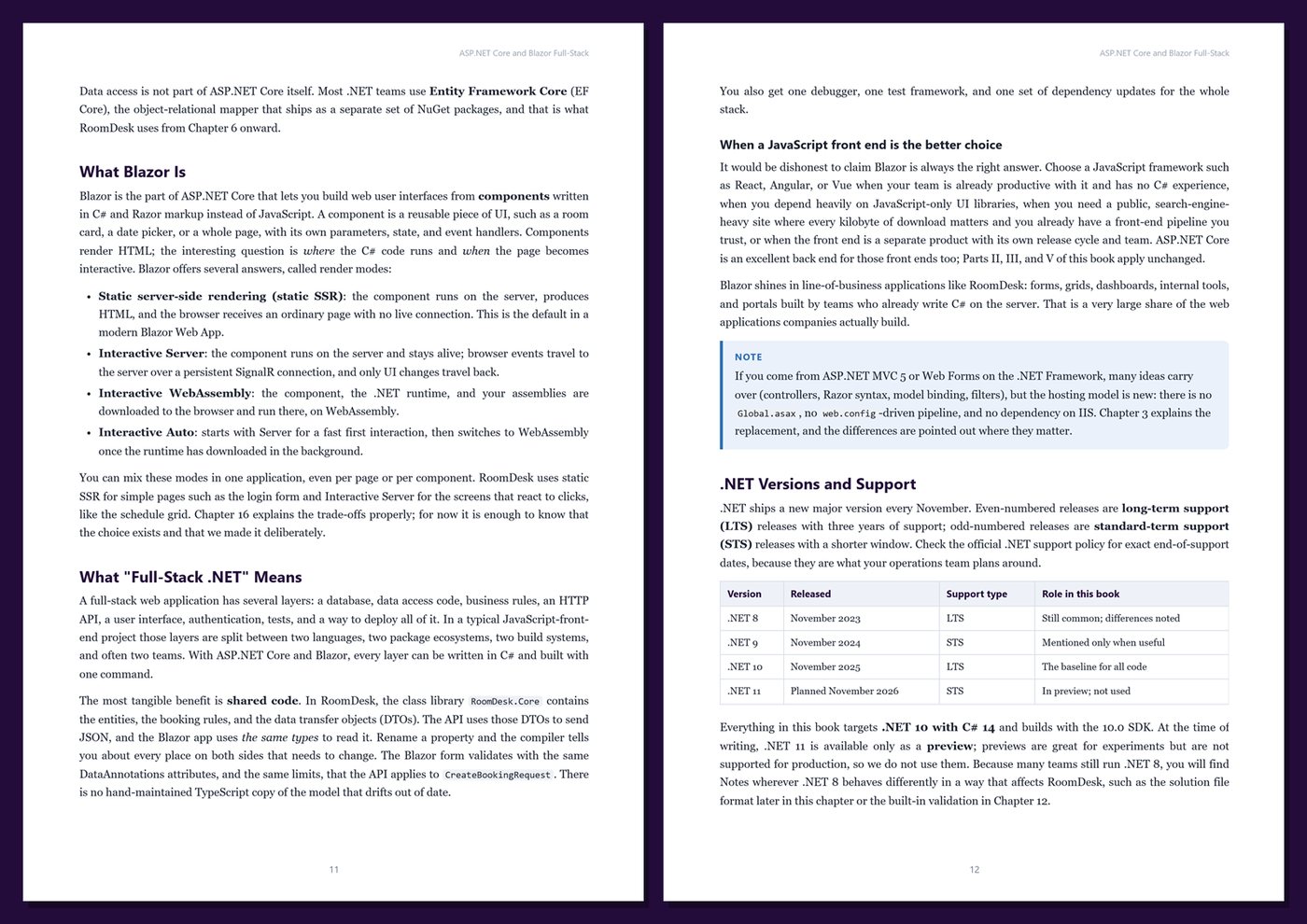
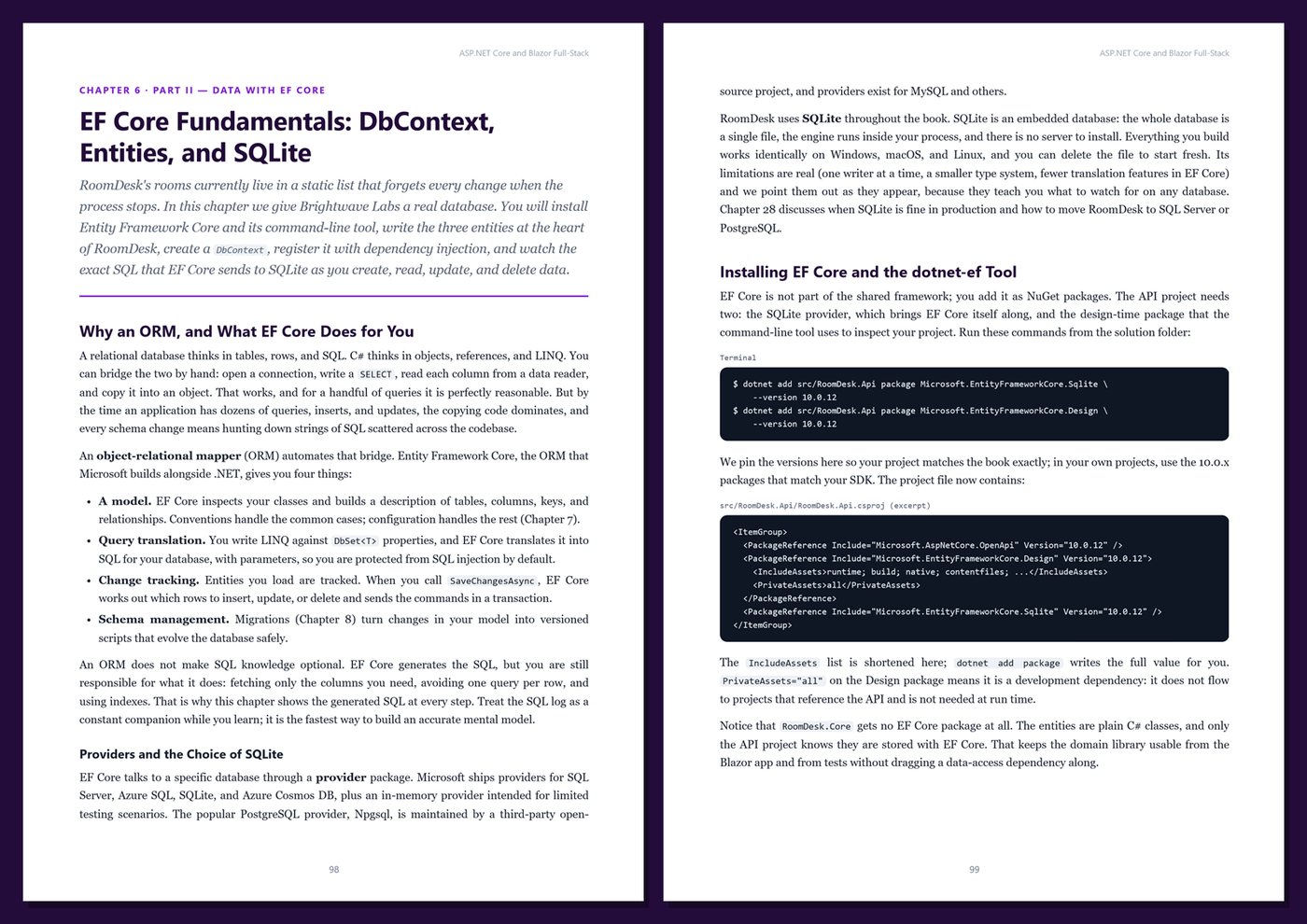
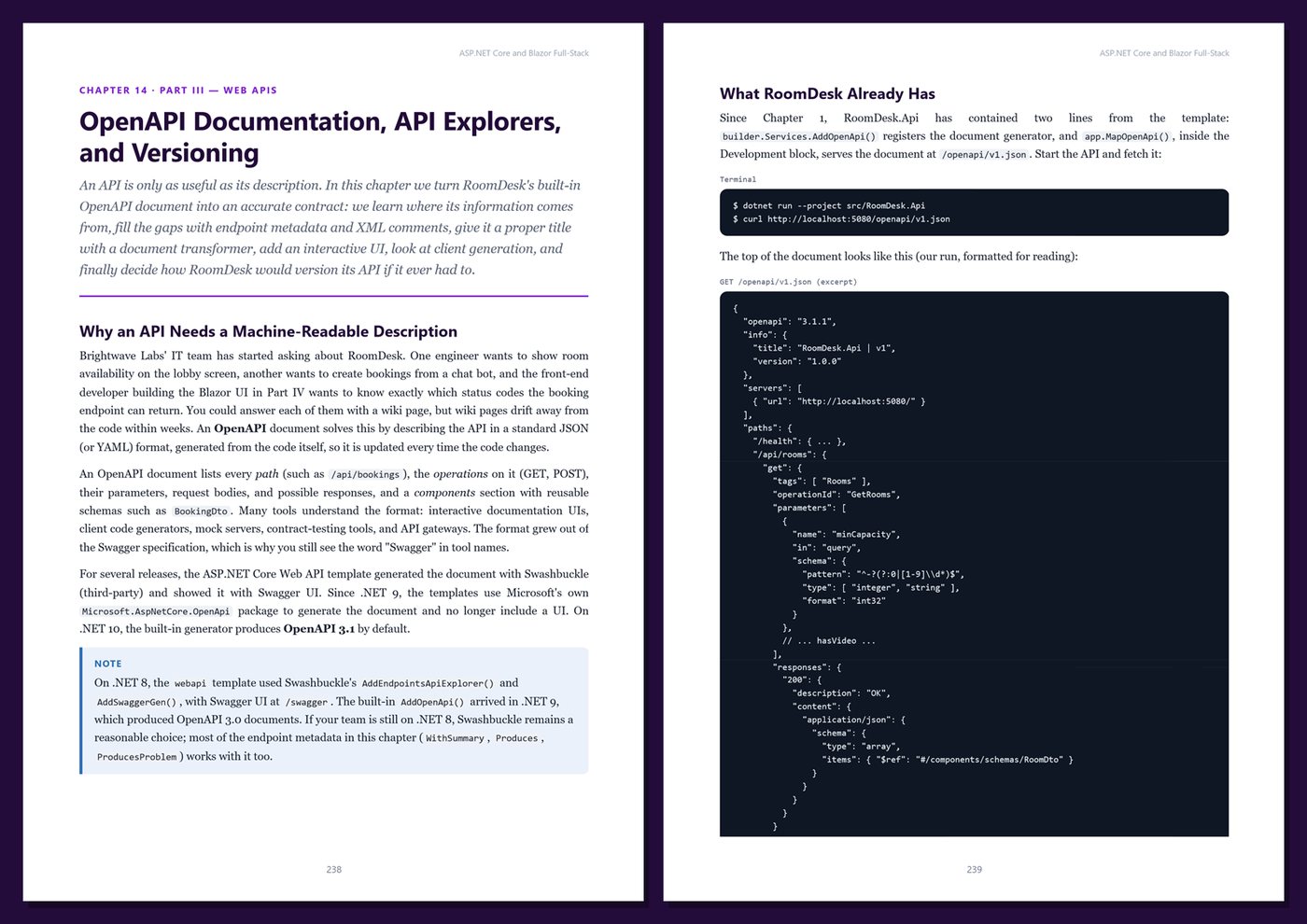
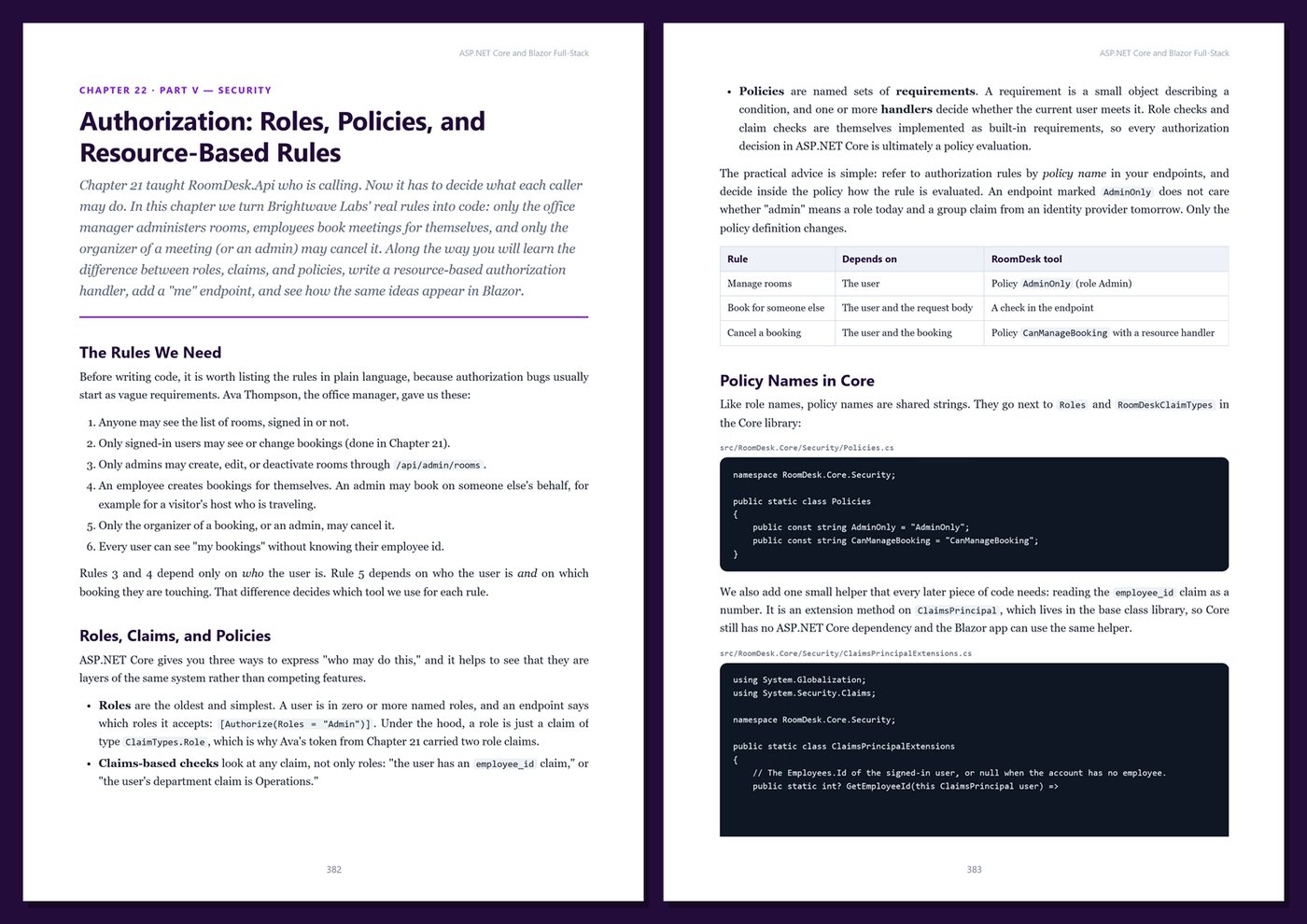
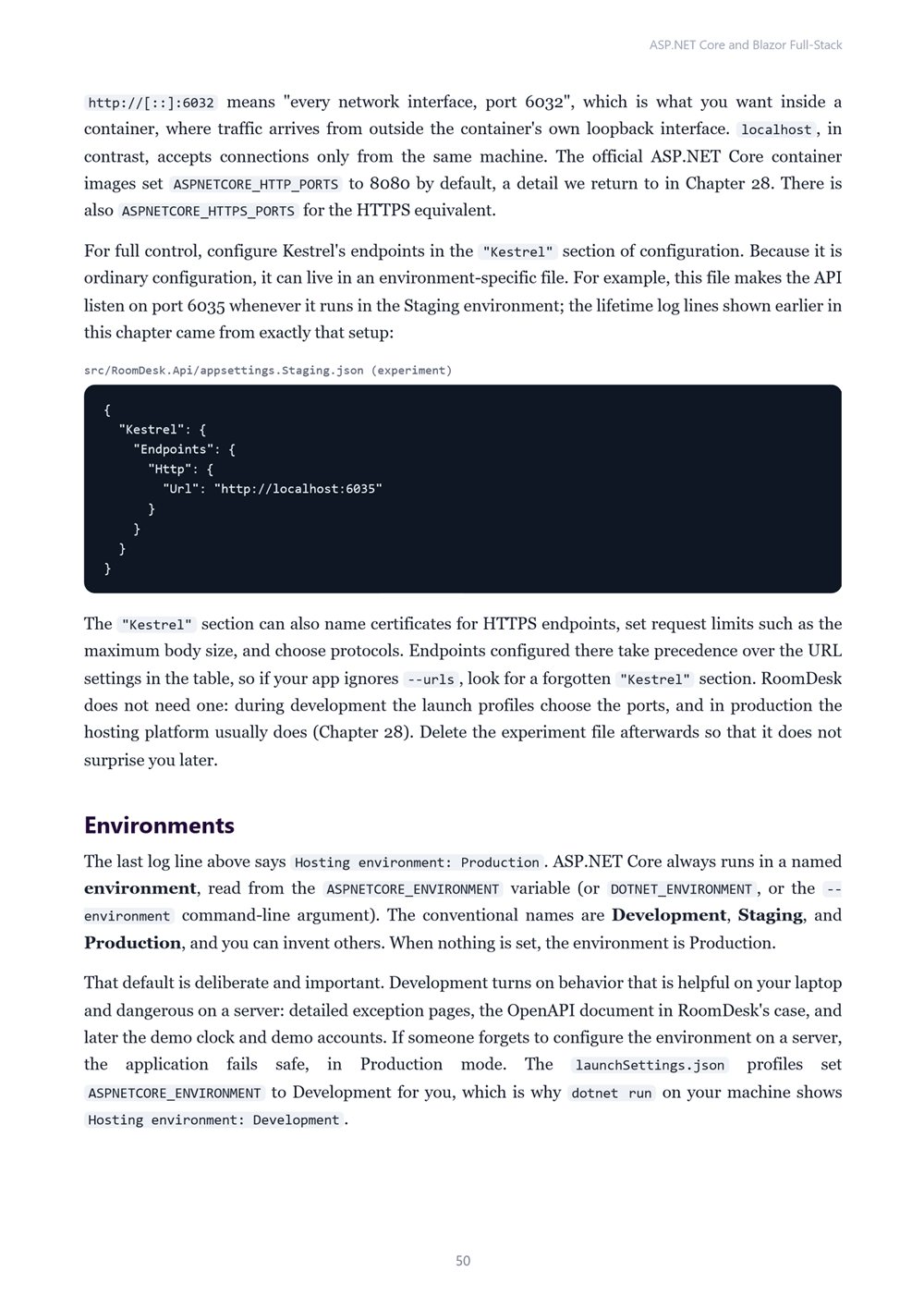
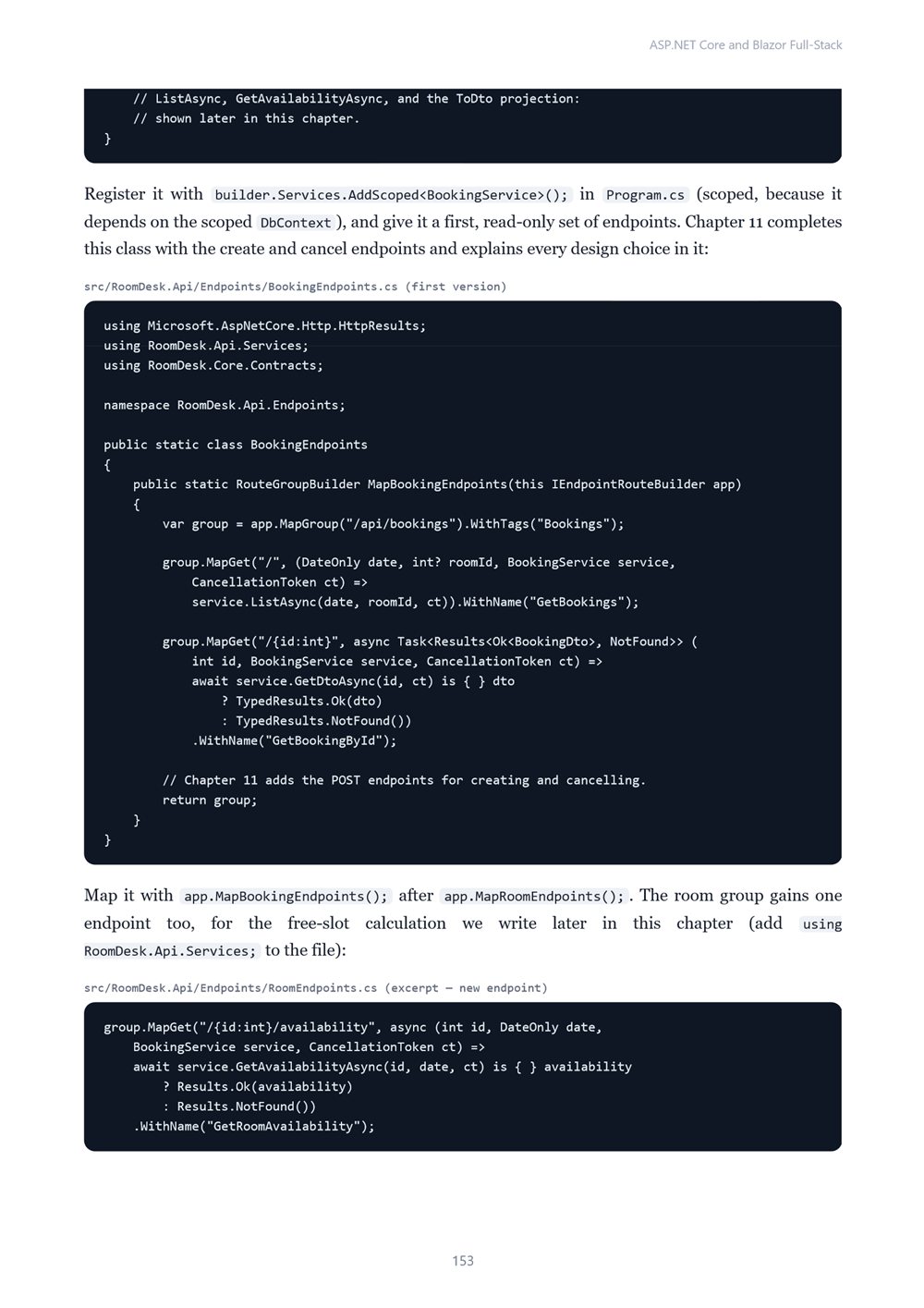
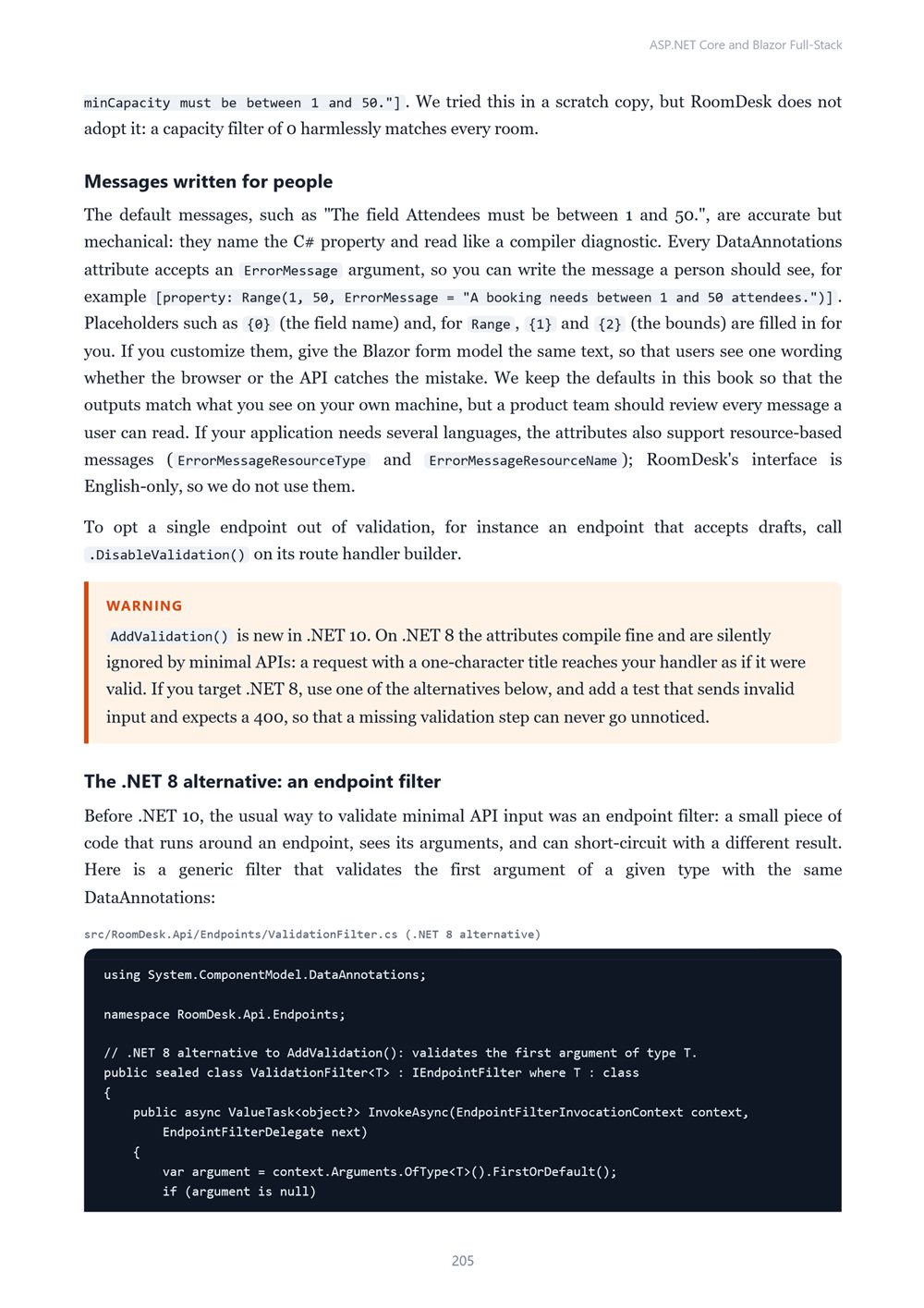
Learn to build complete web applications with ASP.NET Core and Blazor on .NET 10: hosting, middleware, dependency injection, configuration, minimal APIs, EF Core with migrations and transactions, a documented Web API with validation and Problem Details, Blazor components, forms, state, JavaScript…
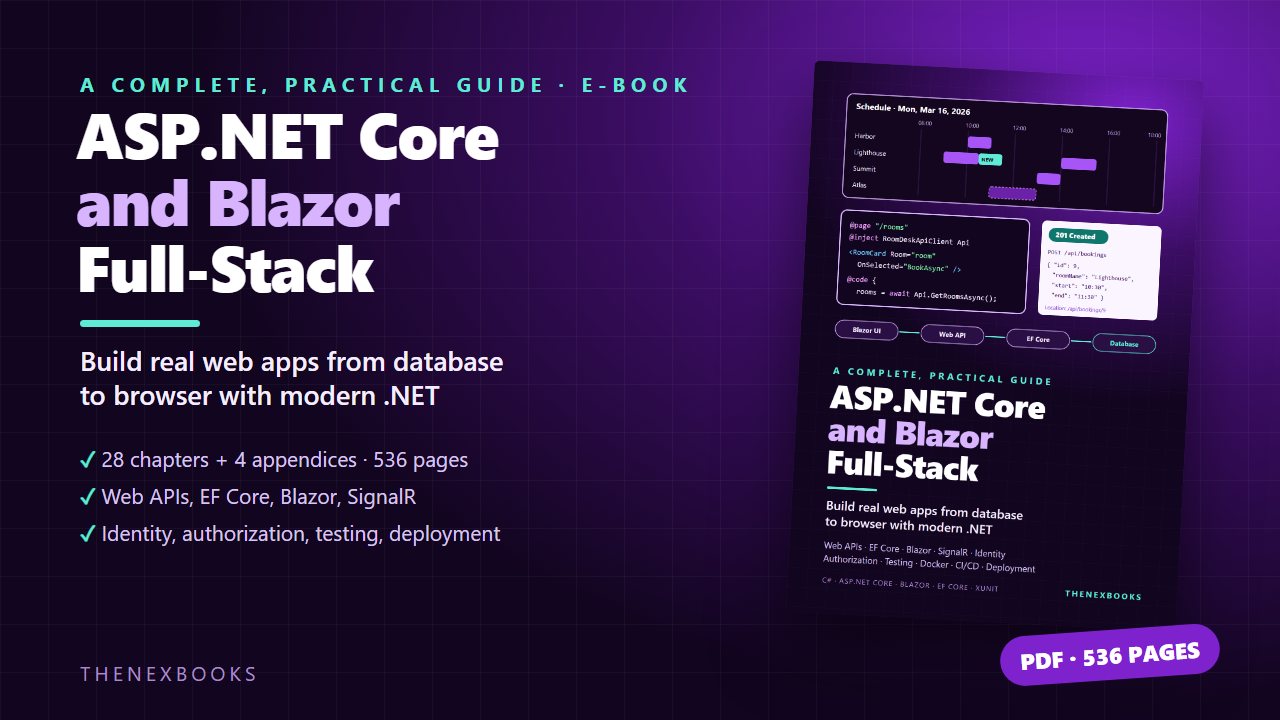
Build Real Web Apps with Web APIs, EF Core, Blazor, Authentication, Testing, and Deployment in Modern .NET
Read before you buy: the PDF here is a free sample — the first 20 pages of the 536-page book (payments, sales and reviews on this demo site are sample data). Get the full e-book at thenexbooks on Gumroad.
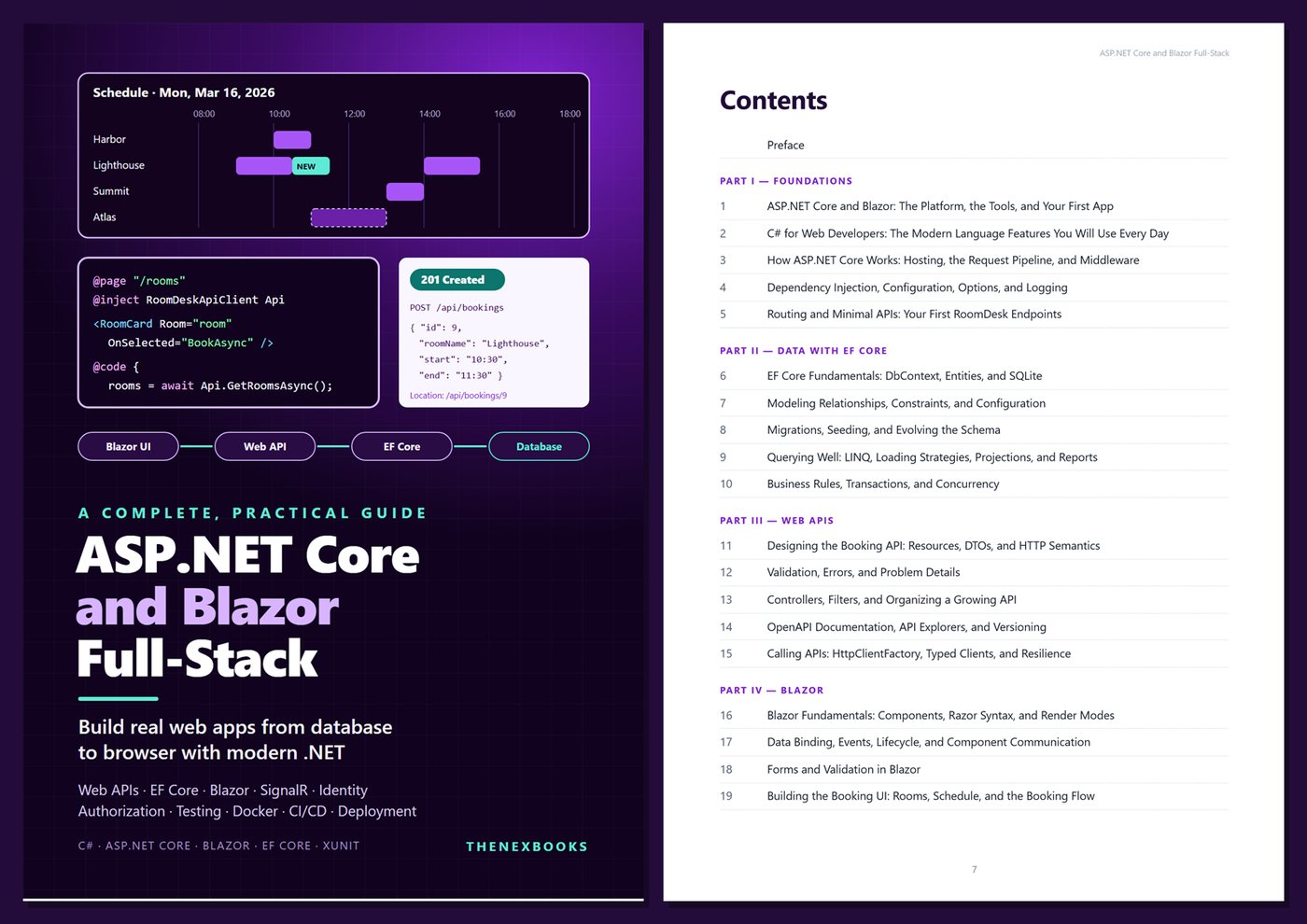
Build every layer of a real web application in C# — from the database to the browser — and ship it with confidence.
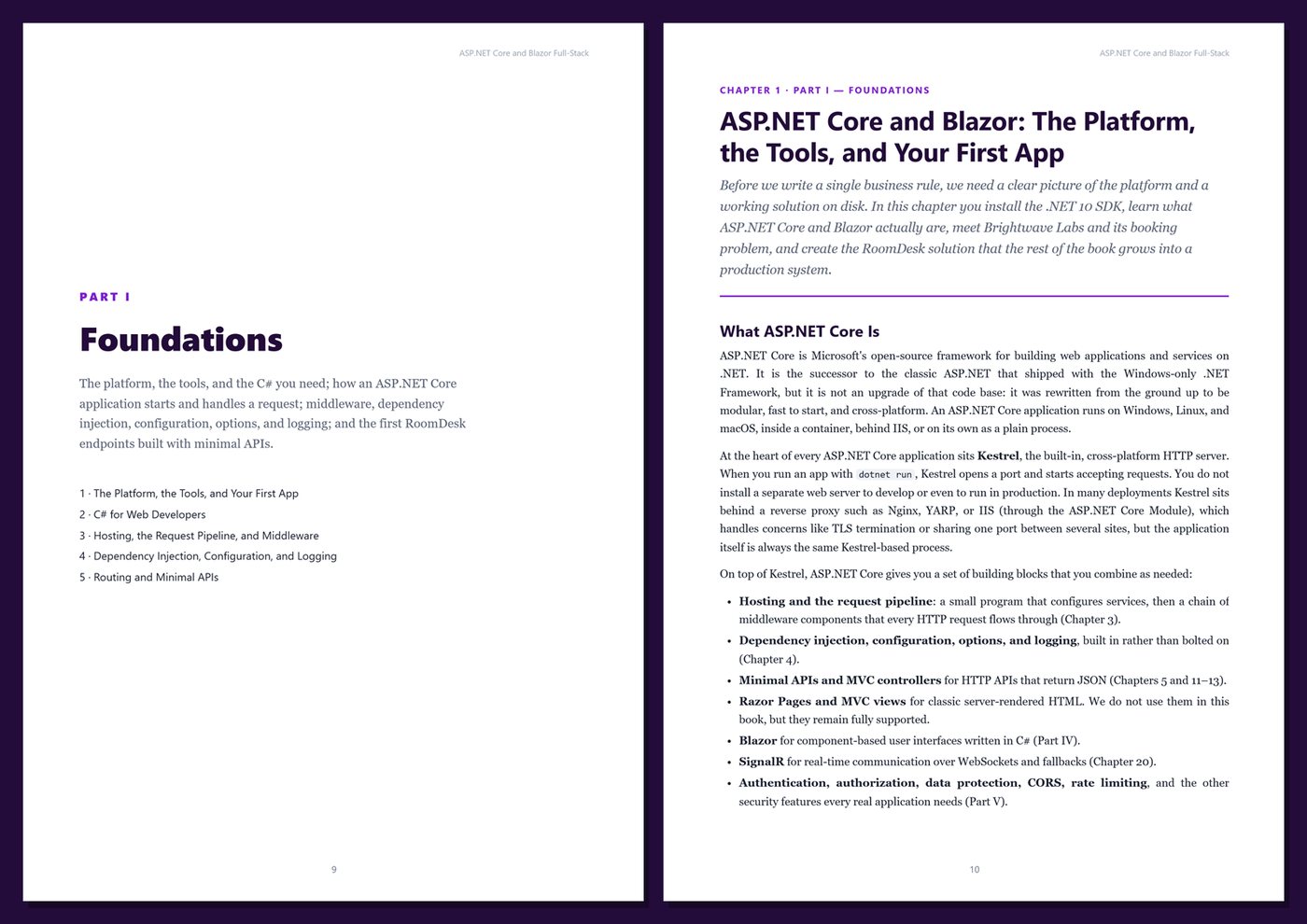
Most business web apps need the same things: a database with rules that must never be broken, an API other systems can call, a user interface people use all day, a secure login, tests you can trust, and a deployment that keeps running. ASP.NET Core and Blazor let you build all of it with one language and one toolchain, and share the same types between server and client.
This book teaches modern full-stack .NET by building one complete application step by step. Each feature appears at the moment it solves a real problem, and every chapter explains why things work the way they do, so you can make good decisions in your own projects instead of copying recipes.
What's inside
- The platform and tools: the dotnet CLI, solutions and projects, templates, and the C# features modern web code relies on (records, nullable reference types, pattern matching, LINQ, async/await, and newer language additions)
- How ASP.NET Core works: hosting, Kestrel, the request pipeline, custom middleware, dependency injection lifetimes, configuration, the options pattern, logging, and a testable clock with TimeProvider
- Minimal APIs: routing, parameter binding, route groups, typed results, endpoint filters, and built-in validation in .NET 10
- Entity Framework Core with SQLite: entities, relationships, constraints, migrations, seeding, efficient LINQ, projections, N+1 problems, reports, transactions, and optimistic concurrency
- Web API design: resources and DTOs, status codes, Problem Details, error codes clients can rely on, controllers and filters, OpenAPI documentation, API UIs, and versioning
- Calling APIs the right way: IHttpClientFactory, typed clients, reading errors, and resilience with retries, timeouts, and circuit breakers
- Blazor: components and Razor syntax, static SSR and interactive render modes, binding and events, the component lifecycle, forms and validation, QuickGrid, state management, JavaScript interop, and real-time updates with SignalR
- Security: ASP.NET Core Identity, roles, claims, policies, resource-based authorization, a secure connection between the Blazor app and the API, HTTPS, CORS, antiforgery, rate limiting, and secrets
- Testing: unit tests with xUnit, a fake clock, integration tests with WebApplicationFactory and an in-memory SQLite database, and component tests with bUnit
- Production: output caching, HybridCache, health checks, structured logging and OpenTelemetry, publishing, container images, Dockerfiles, IIS, Azure options, database migrations in production, and a GitHub Actions pipeline
One running example, start to finish. You build RoomDesk, the meeting-room booking system of Brightwave Labs, a fictional consultancy with six meeting rooms. Employees check availability, book and cancel meetings, and watch a live schedule; the office manager manages rooms. The rules are easy to state and easy to get wrong — no overlapping bookings, weekday business hours, 15-minute slots, room capacity, and a 60-day booking window. RoomDesk grows from one endpoint into a solution with a shared core library, an EF Core-backed Web API, a Blazor Web App, Identity-based security, and a full test suite. Every API response, error message, and test result in the book comes from running the code.
Current and honest. The book targets .NET 10 (LTS) with C# 14 and EF Core 10, and notes where .NET 8 differs. Preview features are labeled as previews, third-party libraries are clearly marked, and there are no invented benchmarks or statistics. Every chapter includes complete code, Tips, Notes, Warnings, exercises, and Key Takeaways, and the appendices give you a cheat sheet, templates and reference code, a production checklist, and a glossary.
Format: PDF, 536 pages (A4), linked table of contents and bookmarks. English. First Edition, 2026. Published by thenexbooks. This book is independent and is not affiliated with, sponsored by, or endorsed by Microsoft Corporation or the .NET Foundation.
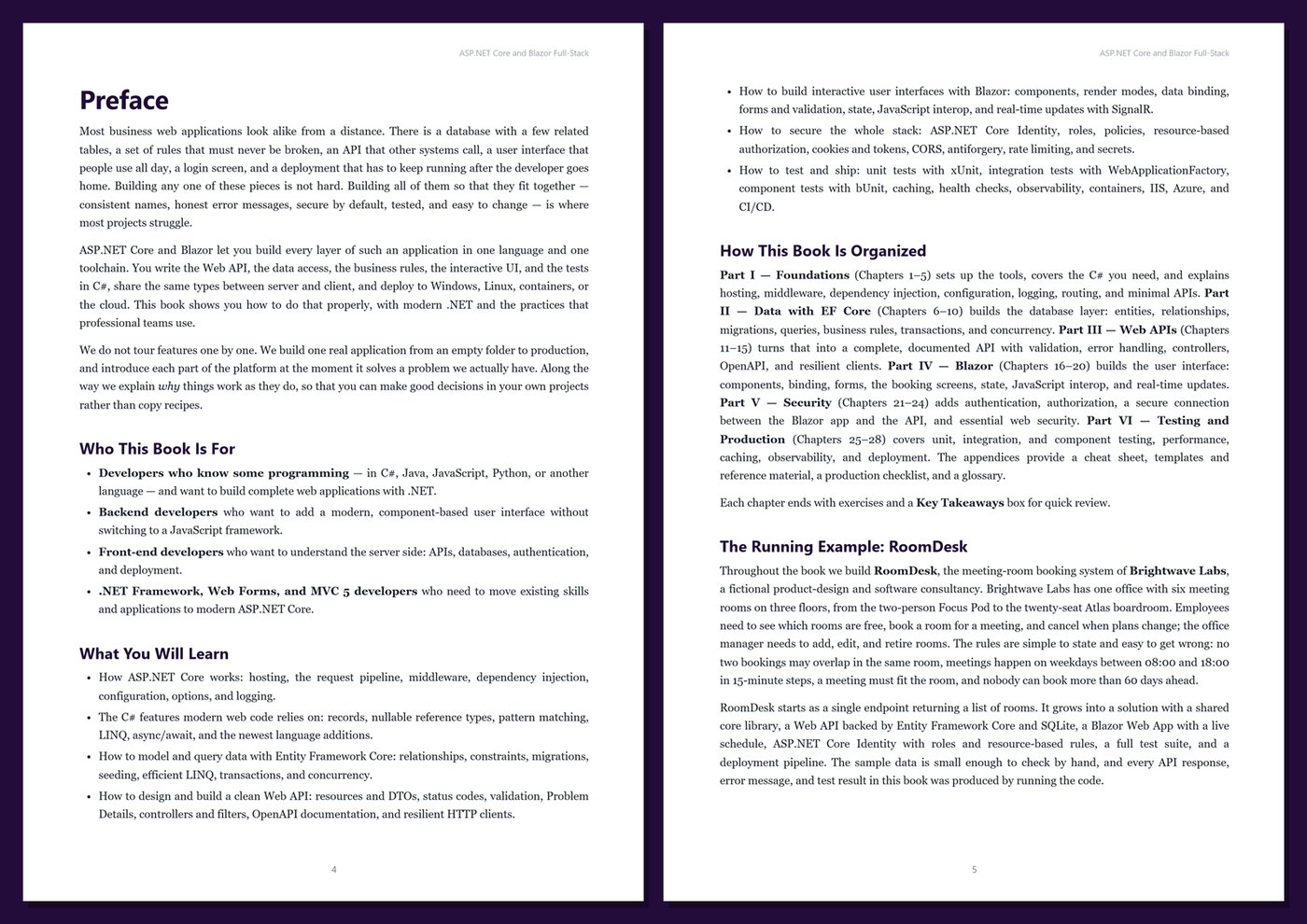
Table of Contents
Part I — Foundations
- Ch 1 · ASP.NET Core and Blazor: The Platform, the Tools, and Your First App
- Ch 2 · C# for Web Developers: The Modern Language Features You Will Use Every Day
- Ch 3 · How ASP.NET Core Works: Hosting, the Request Pipeline, and Middleware
- Ch 4 · Dependency Injection, Configuration, Options, and Logging
- Ch 5 · Routing and Minimal APIs: Your First RoomDesk Endpoints
Part II — Data with EF Core
- Ch 6 · EF Core Fundamentals: DbContext, Entities, and SQLite
- Ch 7 · Modeling Relationships, Constraints, and Configuration
- Ch 8 · Migrations, Seeding, and Evolving the Schema
- Ch 9 · Querying Well: LINQ, Loading Strategies, Projections, and Reports
- Ch 10 · Business Rules, Transactions, and Concurrency
Part III — Web APIs
- Ch 11 · Designing the Booking API: Resources, DTOs, and HTTP Semantics
- Ch 12 · Validation, Errors, and Problem Details
- Ch 13 · Controllers, Filters, and Organizing a Growing API
- Ch 14 · OpenAPI Documentation, API Explorers, and Versioning
- Ch 15 · Calling APIs: HttpClientFactory, Typed Clients, and Resilience
Part IV — Blazor
- Ch 16 · Blazor Fundamentals: Components, Razor Syntax, and Render Modes
- Ch 17 · Data Binding, Events, Lifecycle, and Component Communication
- Ch 18 · Forms and Validation in Blazor
- Ch 19 · Building the Booking UI: Rooms, Schedule, and the Booking Flow
- Ch 20 · State, JavaScript Interop, and Real-Time Updates with SignalR
Part V — Security
- Ch 21 · Authentication with ASP.NET Core Identity
- Ch 22 · Authorization: Roles, Policies, and Resource-Based Rules
- Ch 23 · Securing the Blazor App and the API Together
- Ch 24 · Web Security Essentials: HTTPS, CORS, CSRF, Rate Limiting, and Secrets
Part VI — Testing and Production
- Ch 25 · Unit Testing with xUnit: Rules, Services, and Test Doubles
- Ch 26 · Integration and Component Testing: WebApplicationFactory and bUnit
- Ch 27 · Performance, Caching, Health Checks, and Observability
- Ch 28 · Deployment and Case Study: Publishing, Containers, IIS, Azure, and CI/CD
Appendices
A · ASP.NET Core and Blazor Cheat Sheet
B · Templates and Reference
C · Production Checklist
D · Glossary
Book details
| Detail | |
|---|---|
| Pages | 536 |
| Format | PDF (A4) |
| Language | English |
| Level | Beginner to Intermediate |
| Edition | 1st Edition (2026) |
| Download on this site | Free sample, first 20 pages (PDF) |
| Publisher | thenexbooks |
Files you get
No reviews yet. Only buyers can review.
More from thenexbooks