 1 / 11
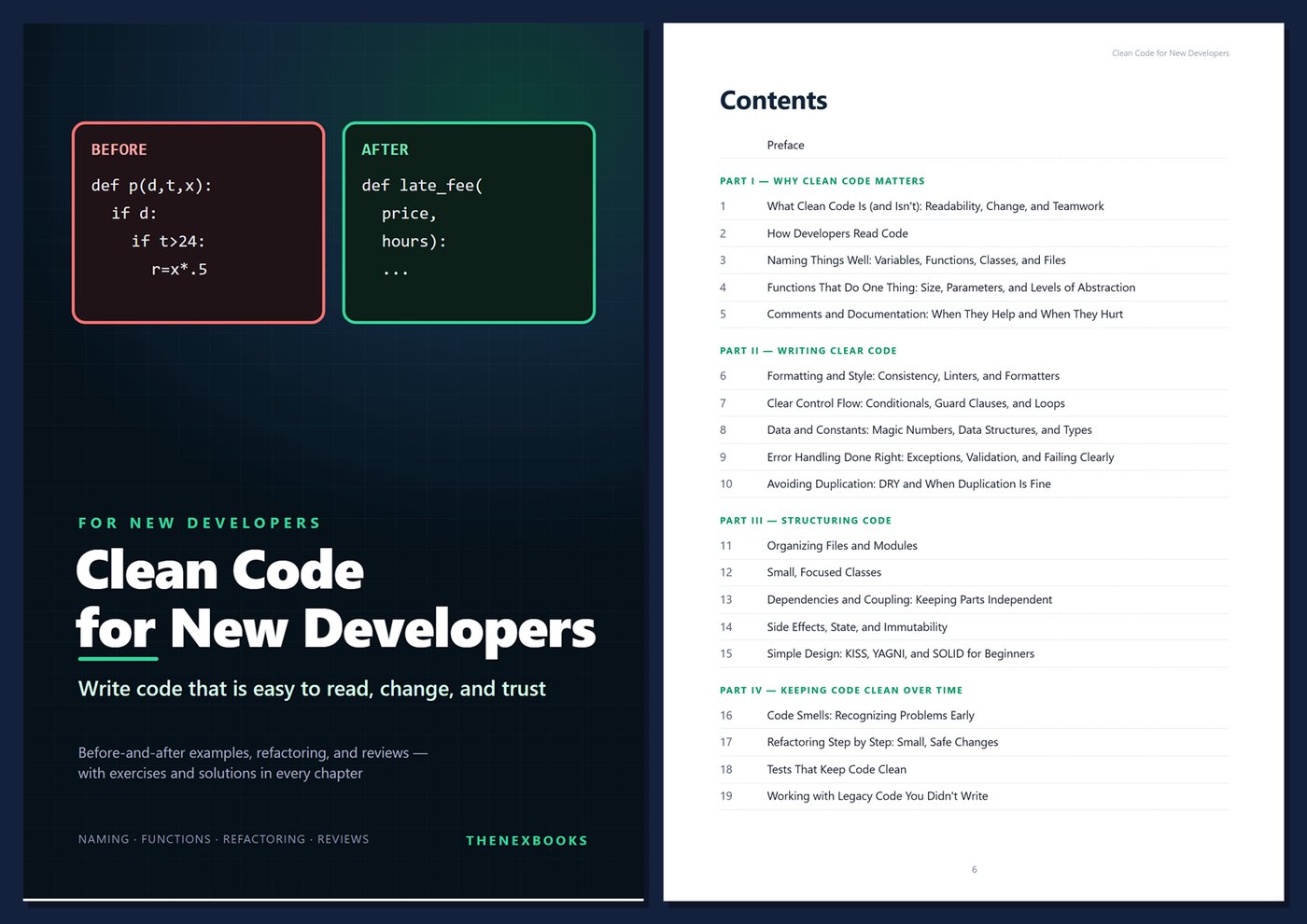
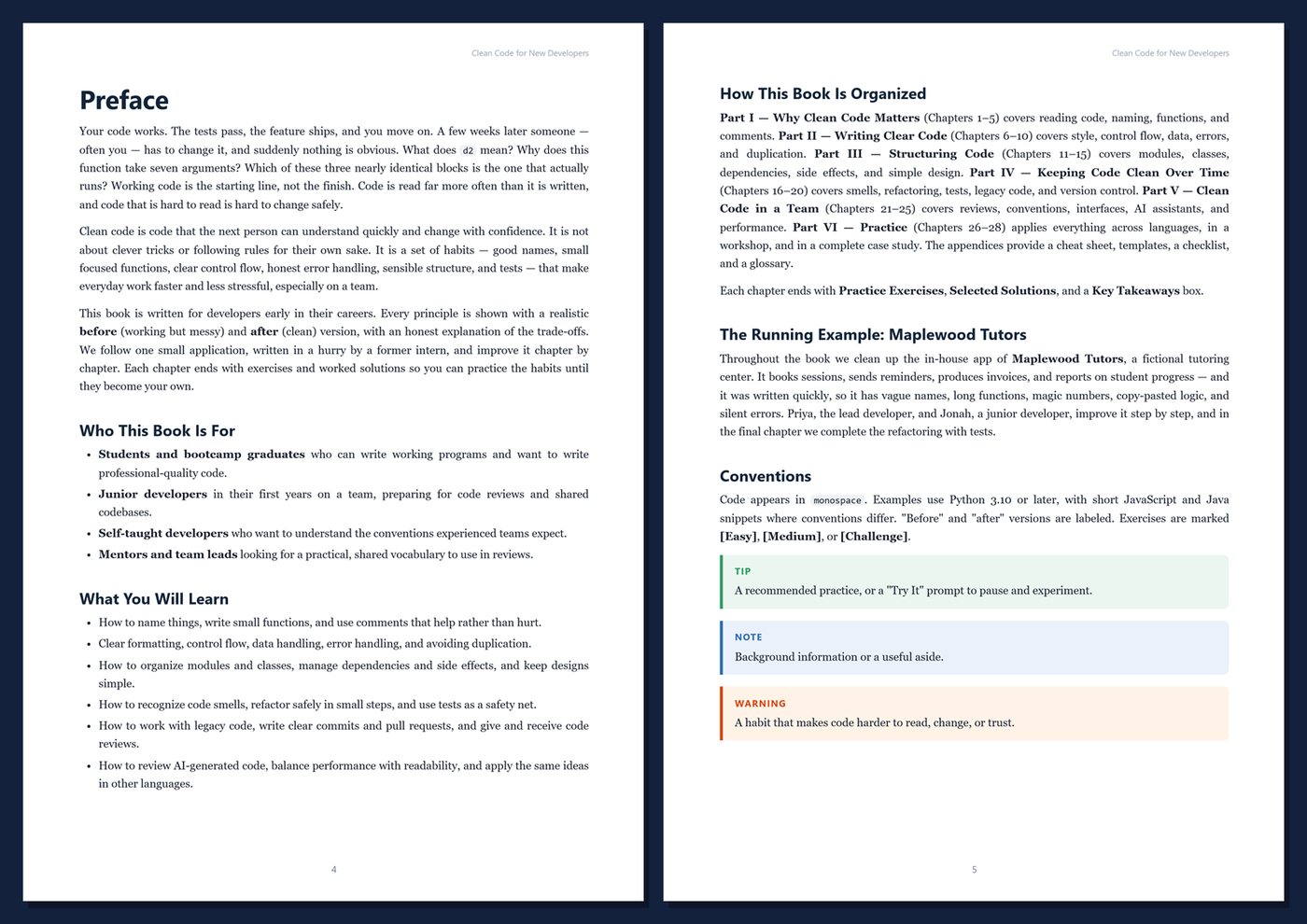
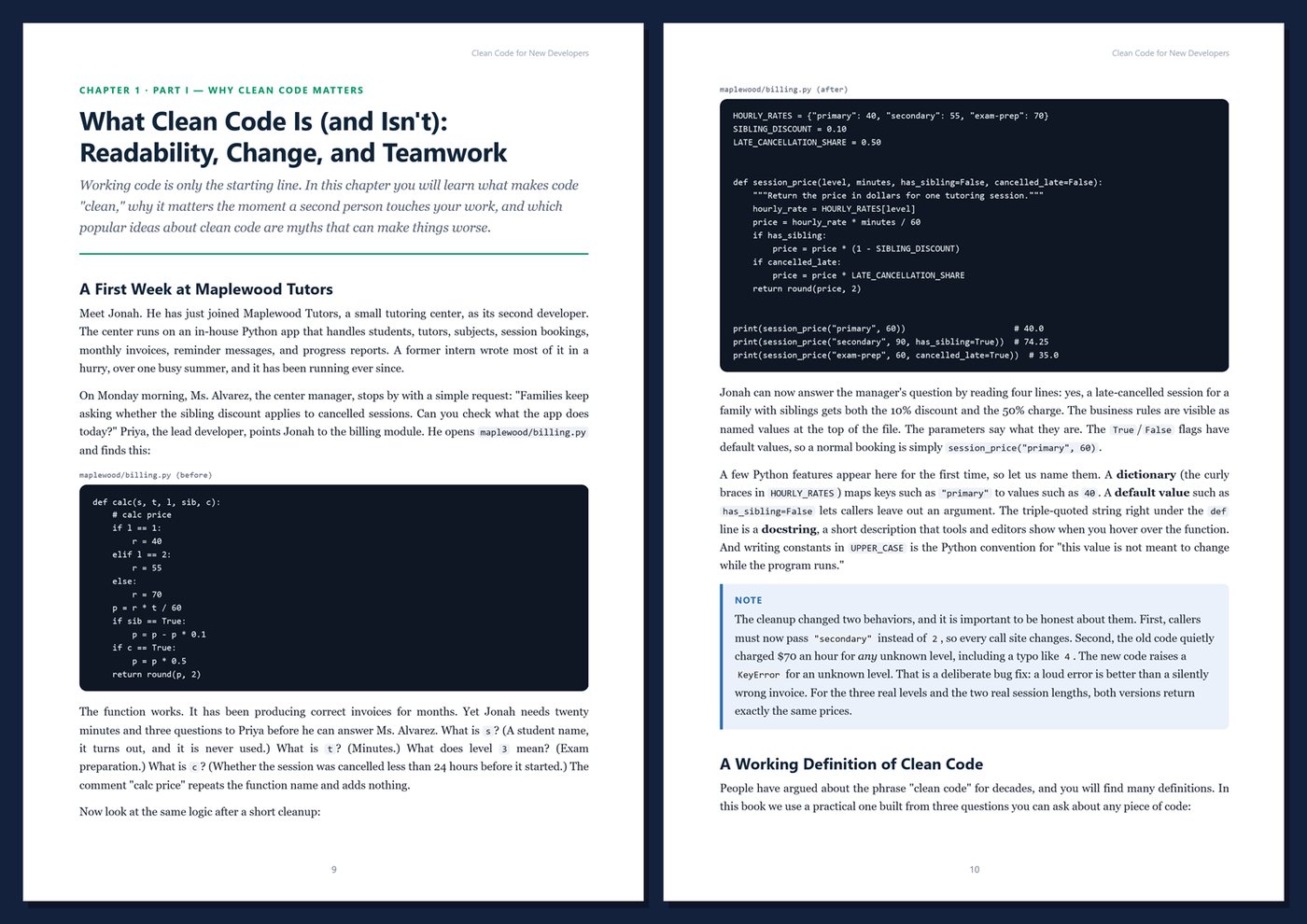
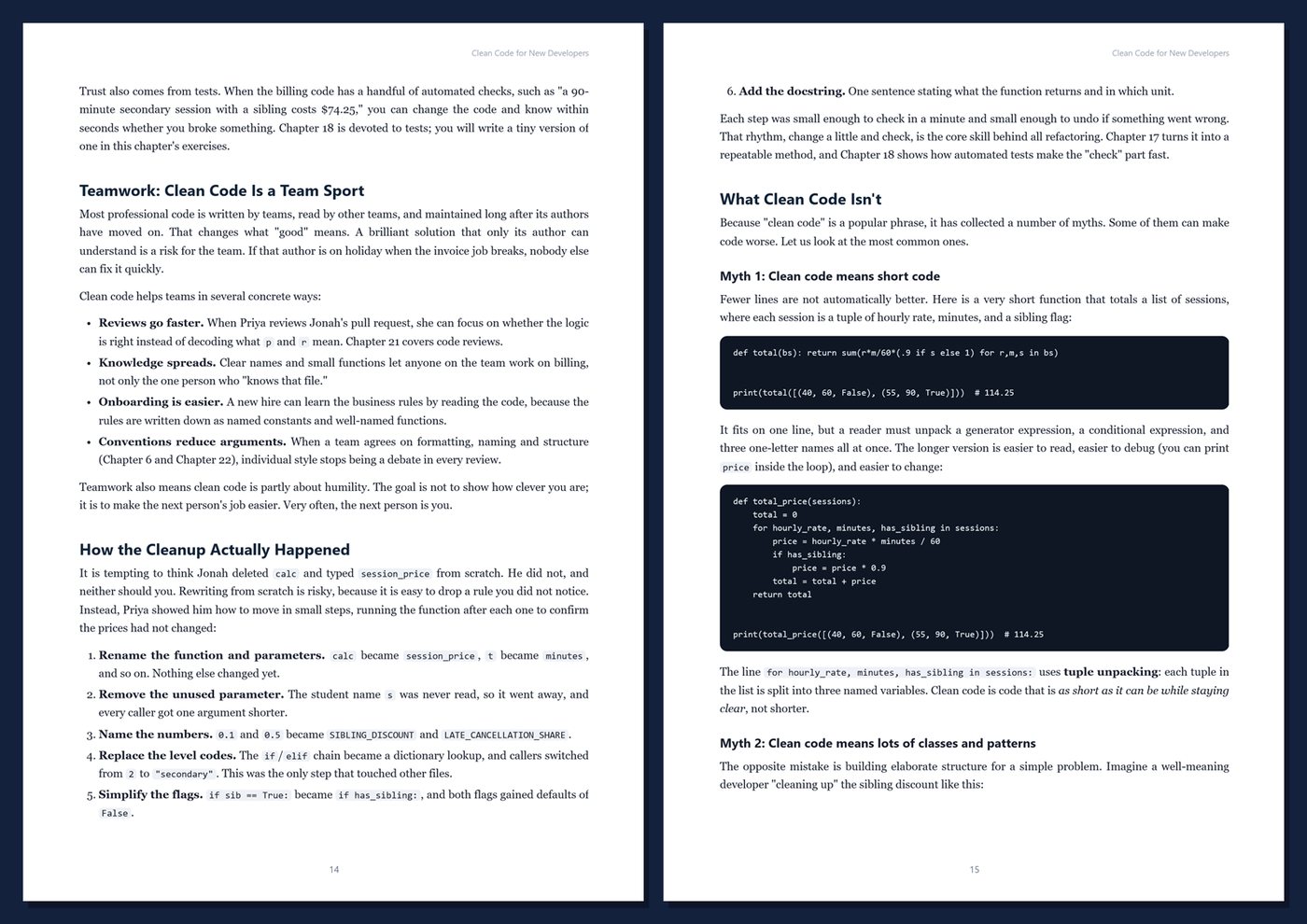
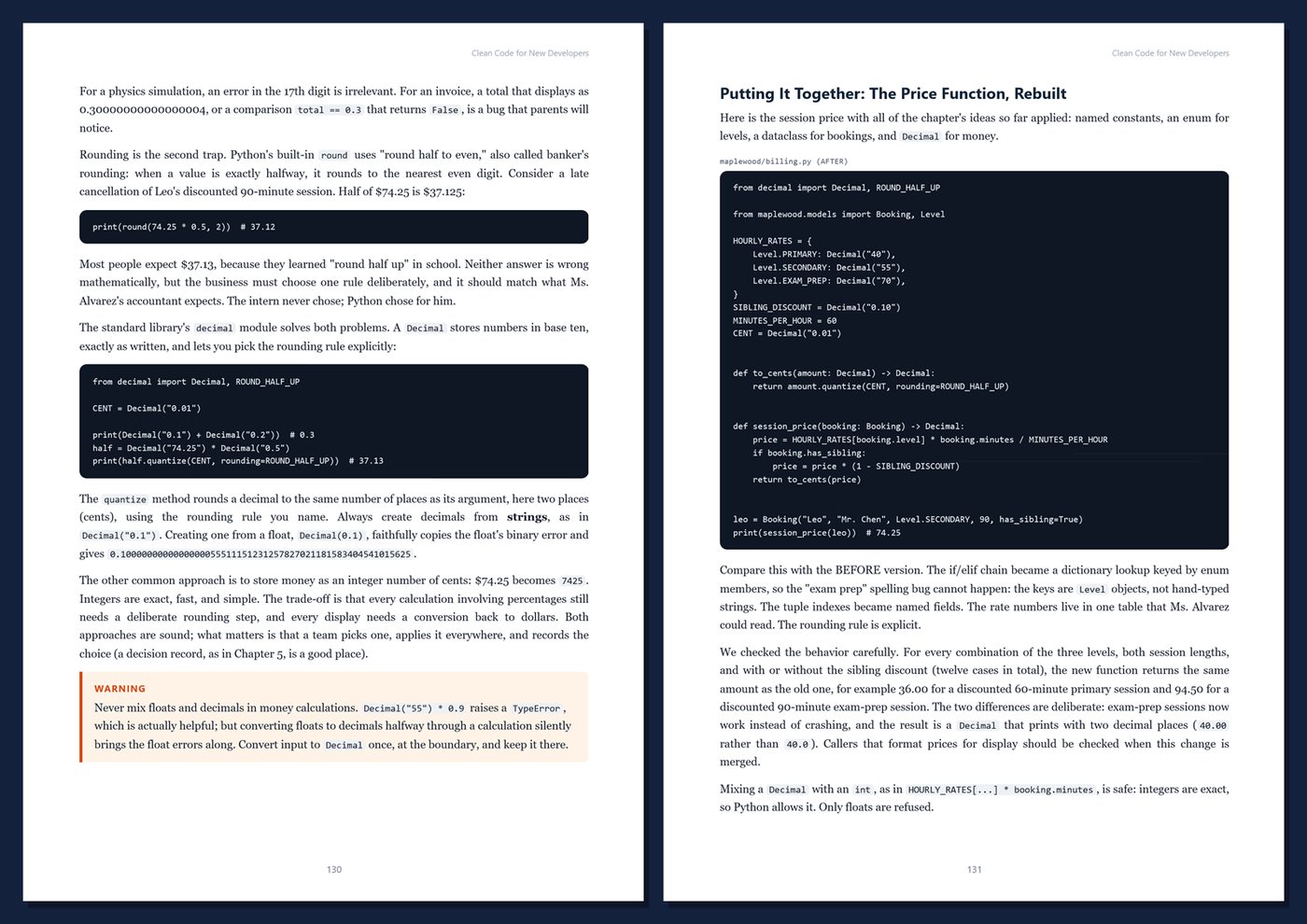
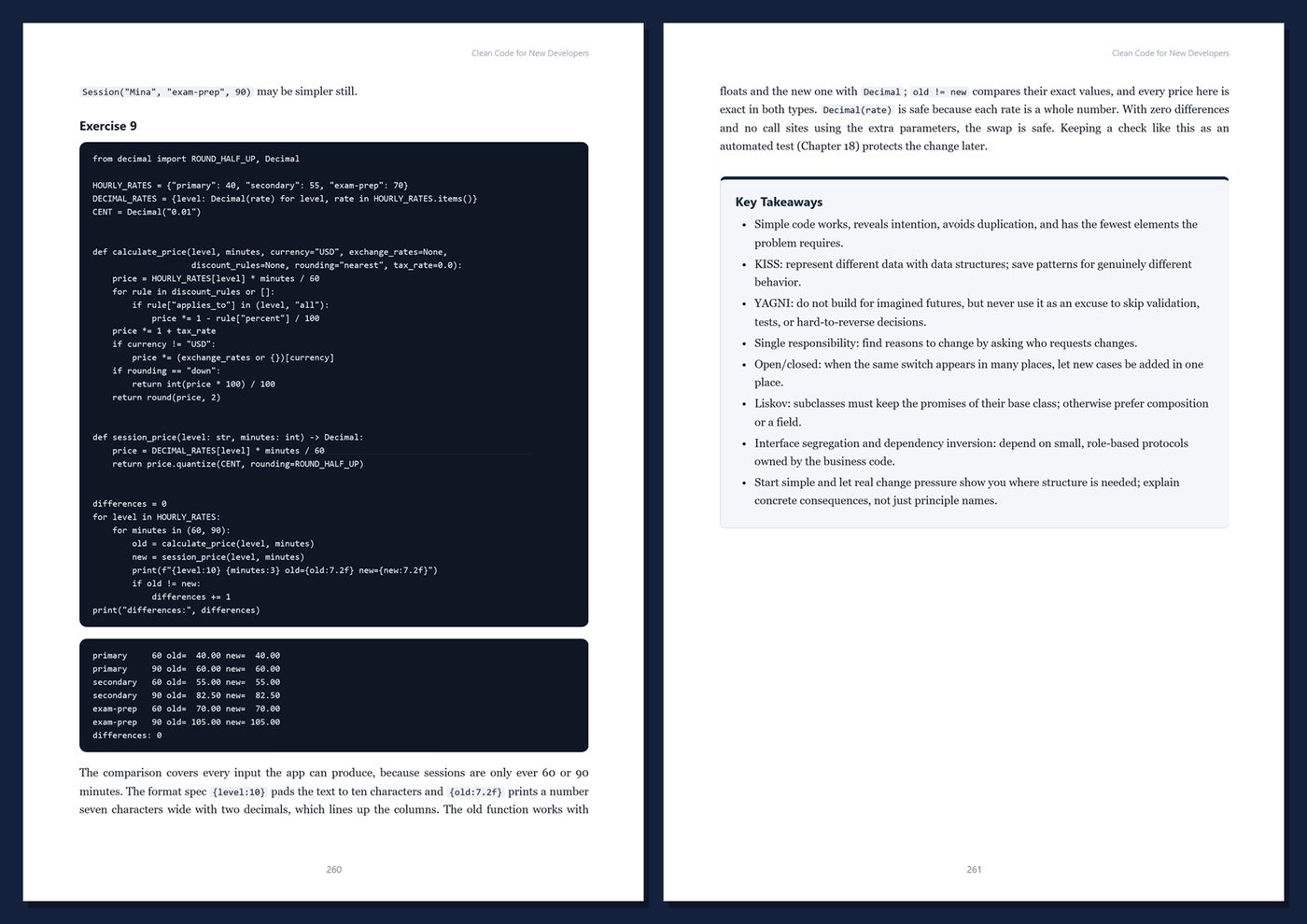
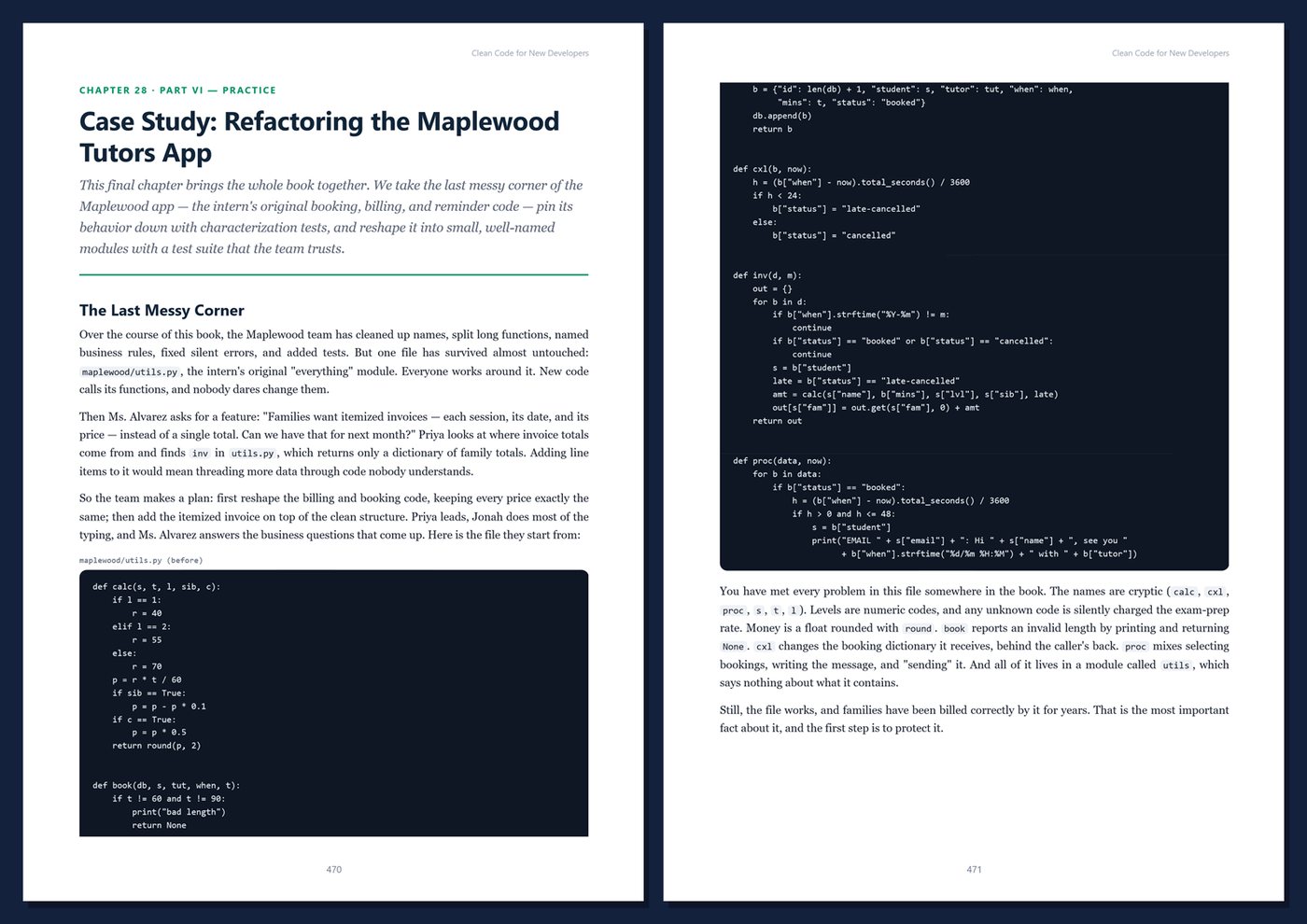
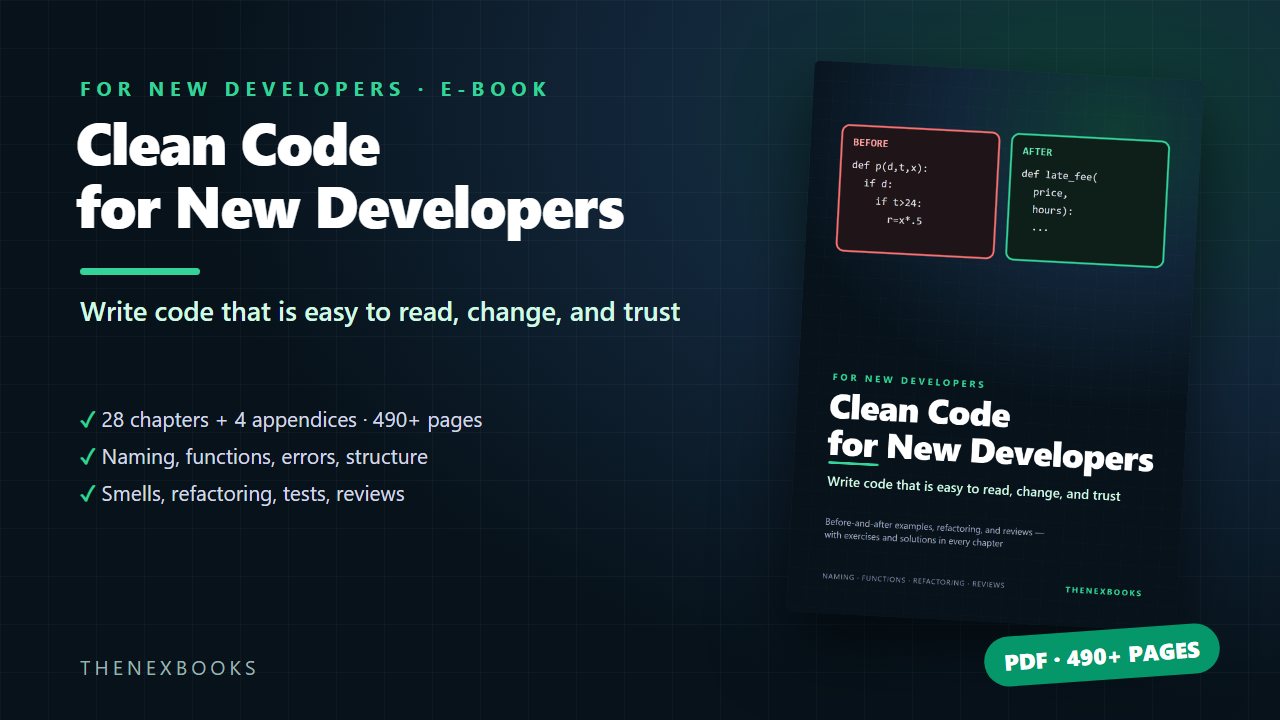
A 499-page, practical guide to writing clean code — naming, functions, errors, structure, refactoring, tests, and code reviews — with before-and-after examples and exercises.
Write Code That Is Easy to Read, Change, and Trust
Read before you buy: the PDF here is a free sample — the first 20 pages of the 499-page book (payments, sales and reviews on this demo site are sample data). Get the full e-book at thenexbooks on Gumroad.
Your code works. Now make it easy to read, change, and trust.
Working code is the starting line, not the finish. Code is read far more often than it is written, and code that is hard to read is hard to change safely. This book teaches the everyday habits that make code clean — good names, small functions, clear control flow, honest error handling, sensible structure, and tests — through realistic before-and-after examples from one small application that we improve chapter by chapter. Every chapter ends with exercises and worked solutions.
- 499 pages · 28 chapters + 4 appendices
- Naming, small focused functions, and comments that help rather than hurt
- Formatting, clear control flow, constants, error handling, and avoiding duplication
- Organizing modules and classes, managing dependencies and side effects, and simple design
- Code smells, safe step-by-step refactoring, tests, and working with legacy code
- Clean commits and pull requests, code reviews, team conventions, and readable APIs
- Reviewing AI-generated code and balancing performance with readability
- Exercises with worked solutions in every chapter, a hands-on workshop, and a complete case study
Table Of Contents
Part I — Why Clean Code Matters
- Ch 1 · What Clean Code Is (and Isn't): Readability, Change, and Teamwork
- Ch 2 · How Developers Read Code
- Ch 3 · Naming Things Well: Variables, Functions, Classes, and Files
- Ch 4 · Functions That Do One Thing: Size, Parameters, and Levels of Abstraction
- Ch 5 · Comments and Documentation: When They Help and When They Hurt
Part II — Writing Clear Code
- Ch 6 · Formatting and Style: Consistency, Linters, and Formatters
- Ch 7 · Clear Control Flow: Conditionals, Guard Clauses, and Loops
- Ch 8 · Data and Constants: Magic Numbers, Data Structures, and Types
- Ch 9 · Error Handling Done Right: Exceptions, Validation, and Failing Clearly
- Ch 10 · Avoiding Duplication: DRY and When Duplication Is Fine
Part III — Structuring Code
- Ch 11 · Organizing Files and Modules
- Ch 12 · Small, Focused Classes
- Ch 13 · Dependencies and Coupling: Keeping Parts Independent
- Ch 14 · Side Effects, State, and Immutability
- Ch 15 · Simple Design: KISS, YAGNI, and SOLID for Beginners
Part IV — Keeping Code Clean Over Time
- Ch 16 · Code Smells: Recognizing Problems Early
- Ch 17 · Refactoring Step by Step: Small, Safe Changes
- Ch 18 · Tests That Keep Code Clean
- Ch 19 · Working with Legacy Code You Didn't Write
- Ch 20 · Version Control Hygiene: Commits, Branches, and Pull Requests That Read Well
Part V — Clean Code in a Team
- Ch 21 · Code Reviews: Giving and Receiving Feedback
- Ch 22 · Team Conventions, Style Guides, and Automation
- Ch 23 · Designing Readable Interfaces and APIs
- Ch 24 · Clean Code with AI Assistants: Prompting, Reviewing, and Owning Generated Code
- Ch 25 · Performance vs Readability: Making Sensible Trade-Offs
Part VI — Practice
- Ch 26 · Clean Code Across Languages: Python, JavaScript, and Java
- Ch 27 · Workshop: Cleaning Up Real Messy Code
- Ch 28 · Case Study: Refactoring the Maplewood Tutors App
Appendices
- App A · Clean Code Cheat Sheet
- App B · Templates and Reference
- App C · Clean Code Checklist
- App D · Glossary
WHO IT IS FOR
Students, bootcamp graduates, and junior developers who can write working code and want to write professional-quality code — plus mentors looking for a shared vocabulary for reviews.
FORMAT
PDF (A4), 499 pages, English, clickable table of contents and PDF bookmarks. 1st Edition, 2026. Published by thenexbooks.
Book details
| Detail | |
|---|---|
| Pages | 499 |
| Format | PDF (A4) |
| Language | English |
| Level | Beginner to Intermediate |
| Edition | 1st Edition, 2026 |
| Download on this site | Free sample, first 20 pages (PDF) |
| Publisher | thenexbooks |
Files you get
No reviews yet. Only buyers can review.
More from thenexbooks