 1 / 11
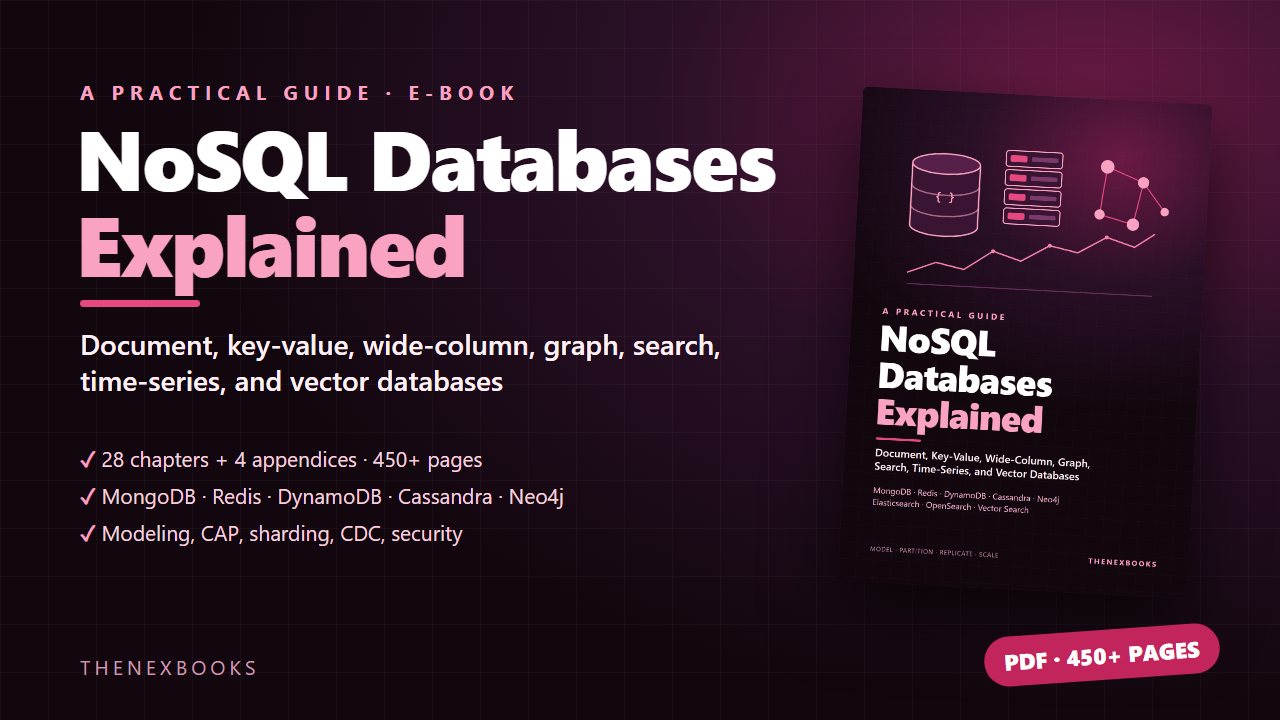
A 464-page, hands-on guide to NoSQL databases — how they work, how to model data for them, and how to choose, build with, and operate MongoDB, Redis, DynamoDB, Cassandra, Neo4j, search, time-series, and vector databases.
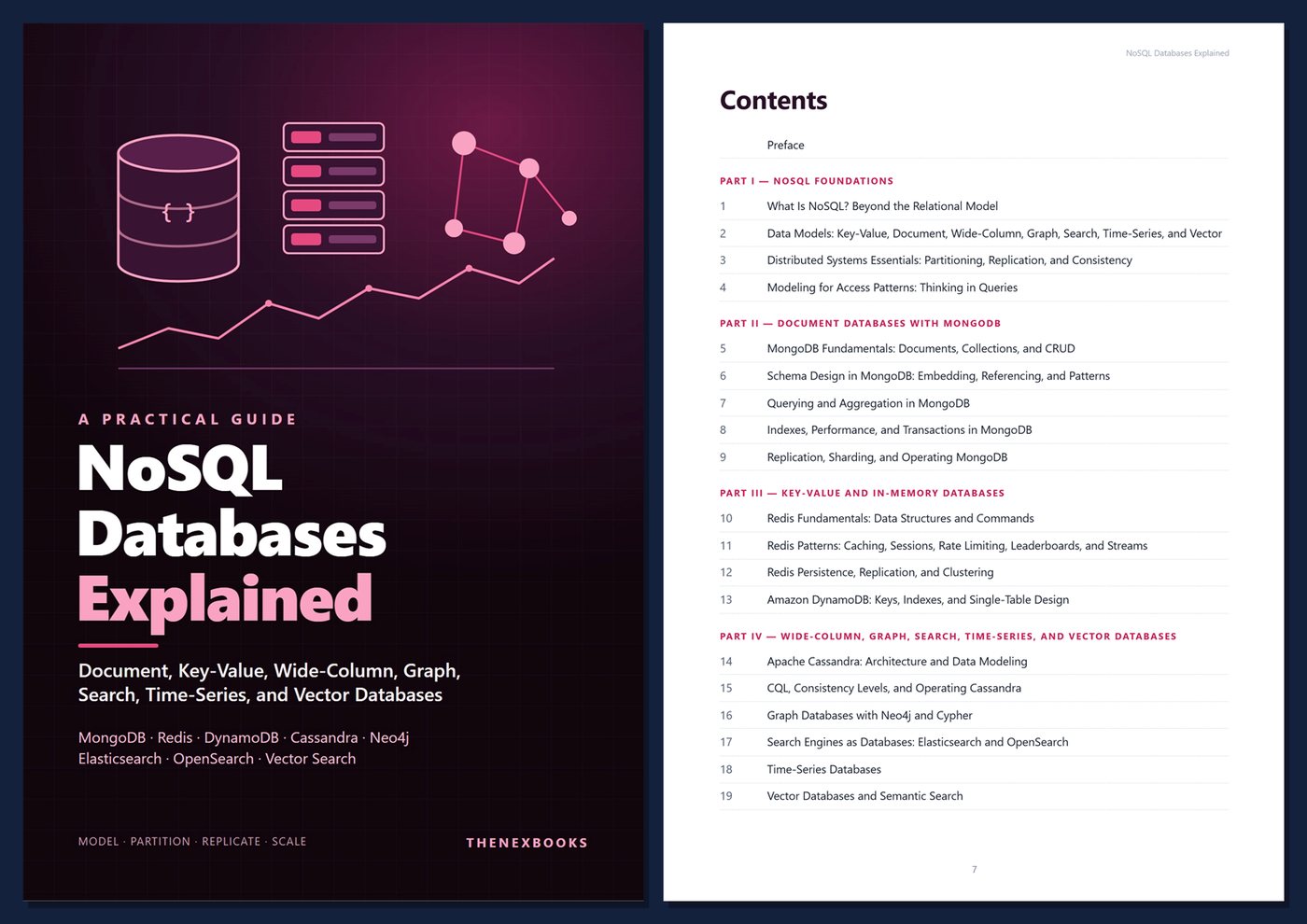
A Practical Guide to Document, Key-Value, Wide-Column, Graph, Search, Time-Series, and Vector Databases
Read before you buy: the PDF here is a free sample — the first 20 pages of the 464-page book (payments, sales and reviews on this demo site are sample data). Get the full e-book at thenexbooks on Gumroad.
Choose the right database — and model your data the right way.
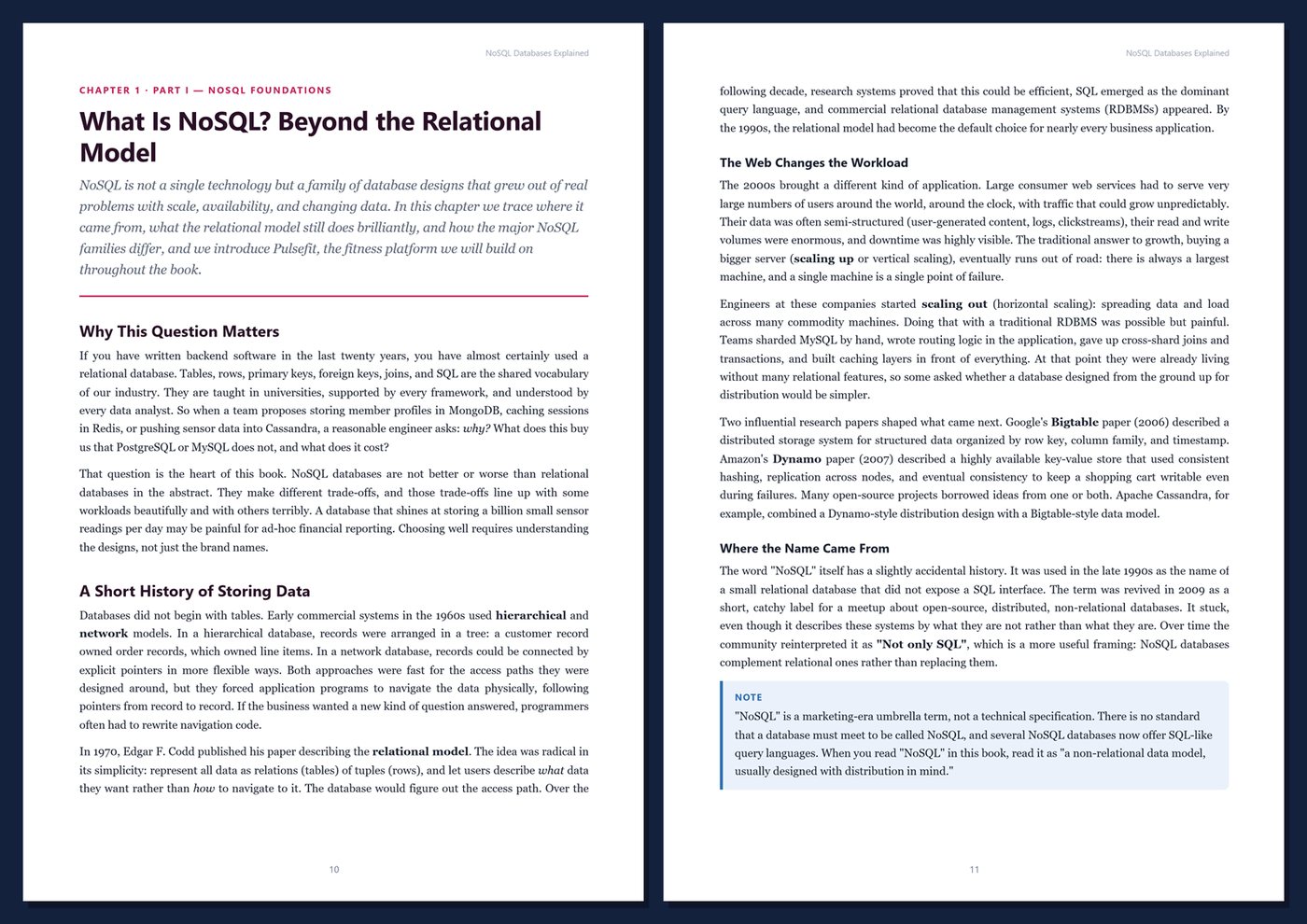
Relational databases are great, but modern applications also need real-time leaderboards, massive telemetry streams, flexible documents, social graphs, full-text search, and semantic search for AI features. NoSQL databases handle these workloads well — if you understand how they store, distribute, and query data. This book explains the ideas behind every major NoSQL family and then gets hands-on with the leading database in each, using one running example: Pulsefit, a fictional fitness platform that uses the right database for each job.
- 464 pages · 28 chapters + 4 appendices
- The foundations: data models, partitioning, replication, quorums, CAP and PACELC — explained correctly
- Query-first data modeling and denormalization trade-offs
- MongoDB in depth: schema design patterns, aggregation, indexes, transactions, replication, sharding
- Redis data structures and real-time patterns, persistence and clustering; DynamoDB single-table design
- Cassandra, Neo4j and Cypher, Elasticsearch and OpenSearch, time-series databases, and vector search
- Choosing a database, drivers and ODMs, schema evolution, change data capture, security, and monitoring
- 4 end-to-end projects — plus Docker-based exercises in every chapter
- Vendor-neutral, honest trade-offs — including when to stay relational
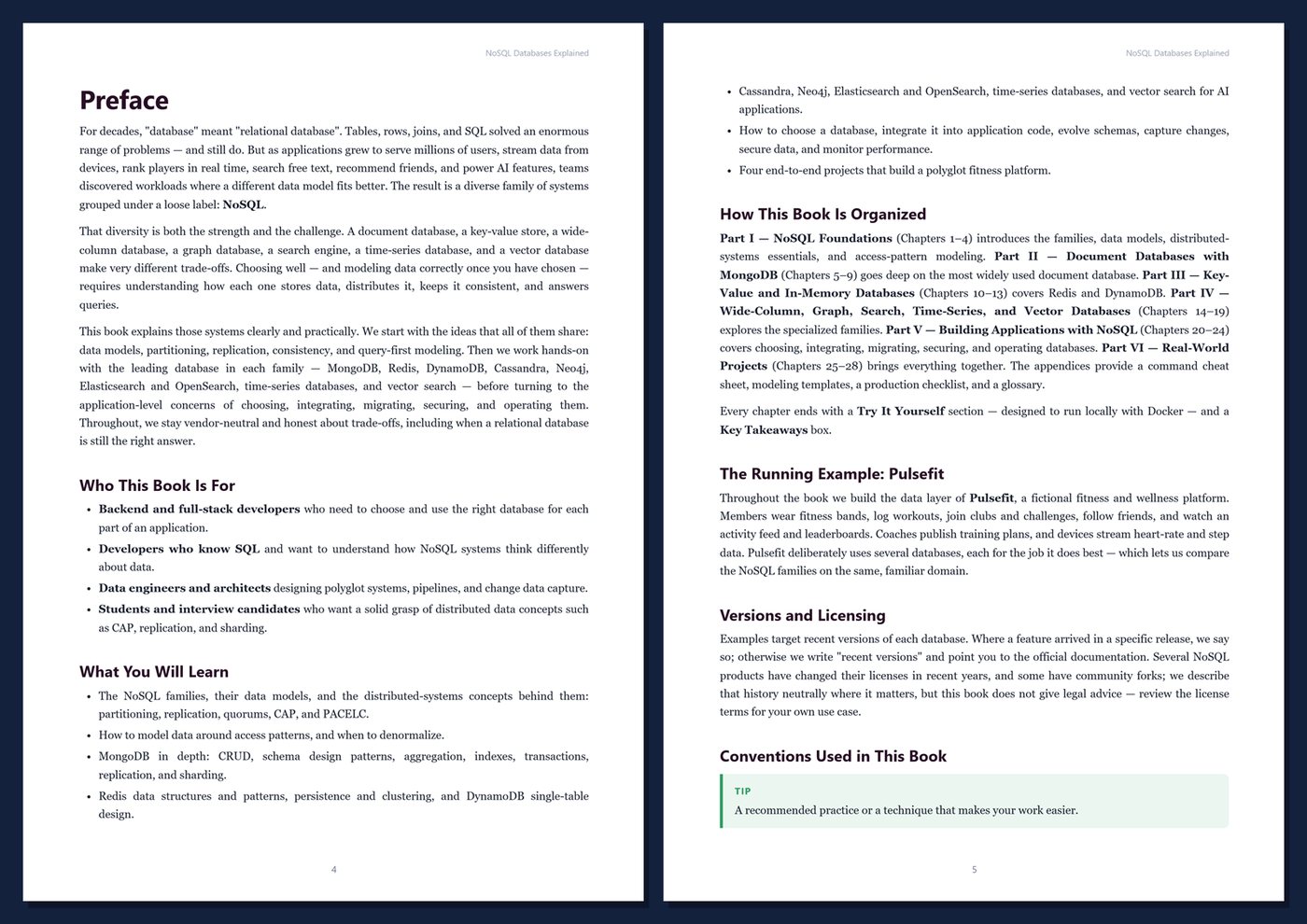
Table Of Contents
Part I — NoSQL Foundations
- Ch 1 · What Is NoSQL? Beyond the Relational Model
- Ch 2 · Data Models: Key-Value, Document, Wide-Column, Graph, Search, Time-Series, and Vector
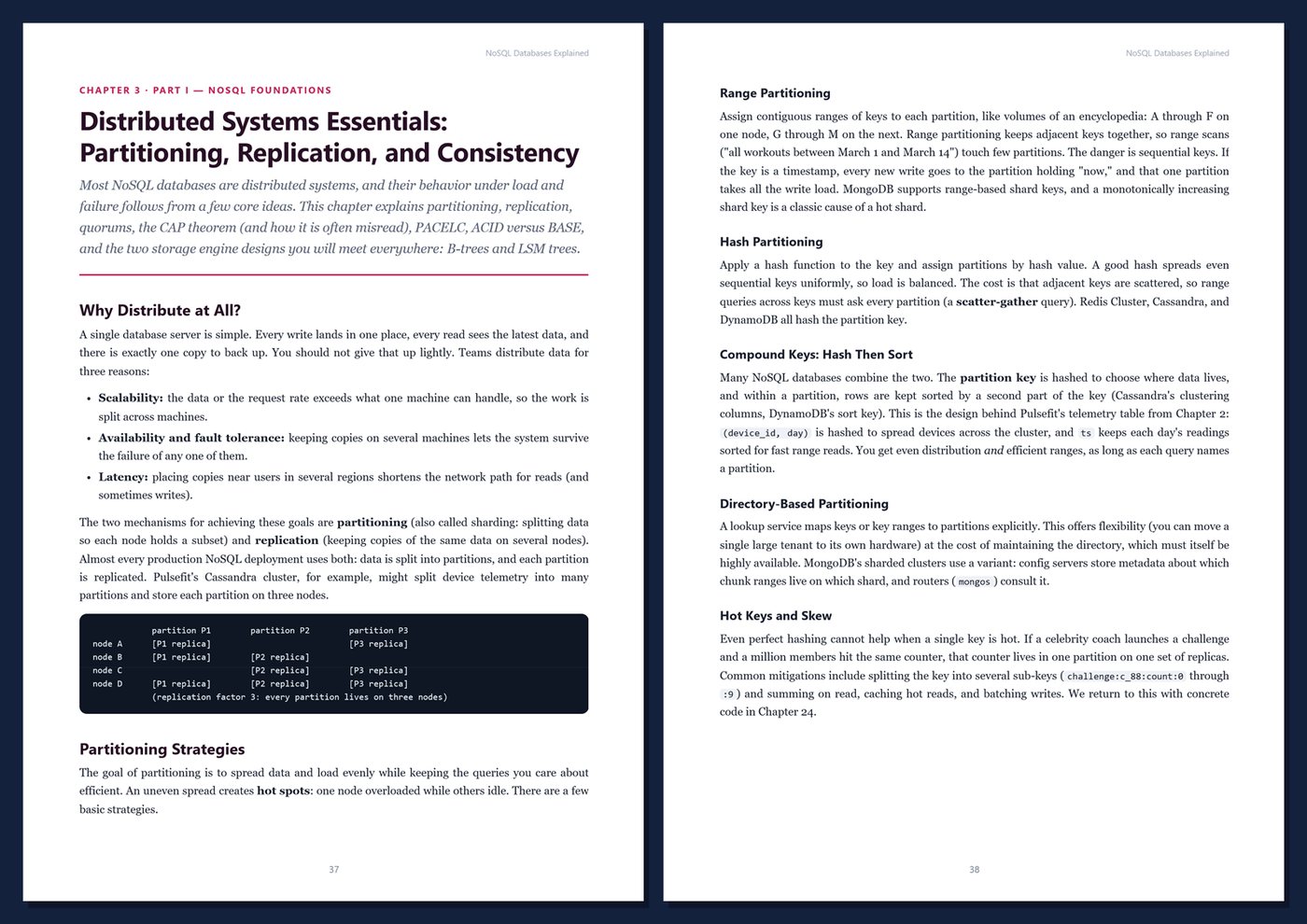
- Ch 3 · Distributed Systems Essentials: Partitioning, Replication, and Consistency
- Ch 4 · Modeling for Access Patterns: Thinking in Queries
Part II — Document Databases with MongoDB
- Ch 5 · MongoDB Fundamentals: Documents, Collections, and CRUD
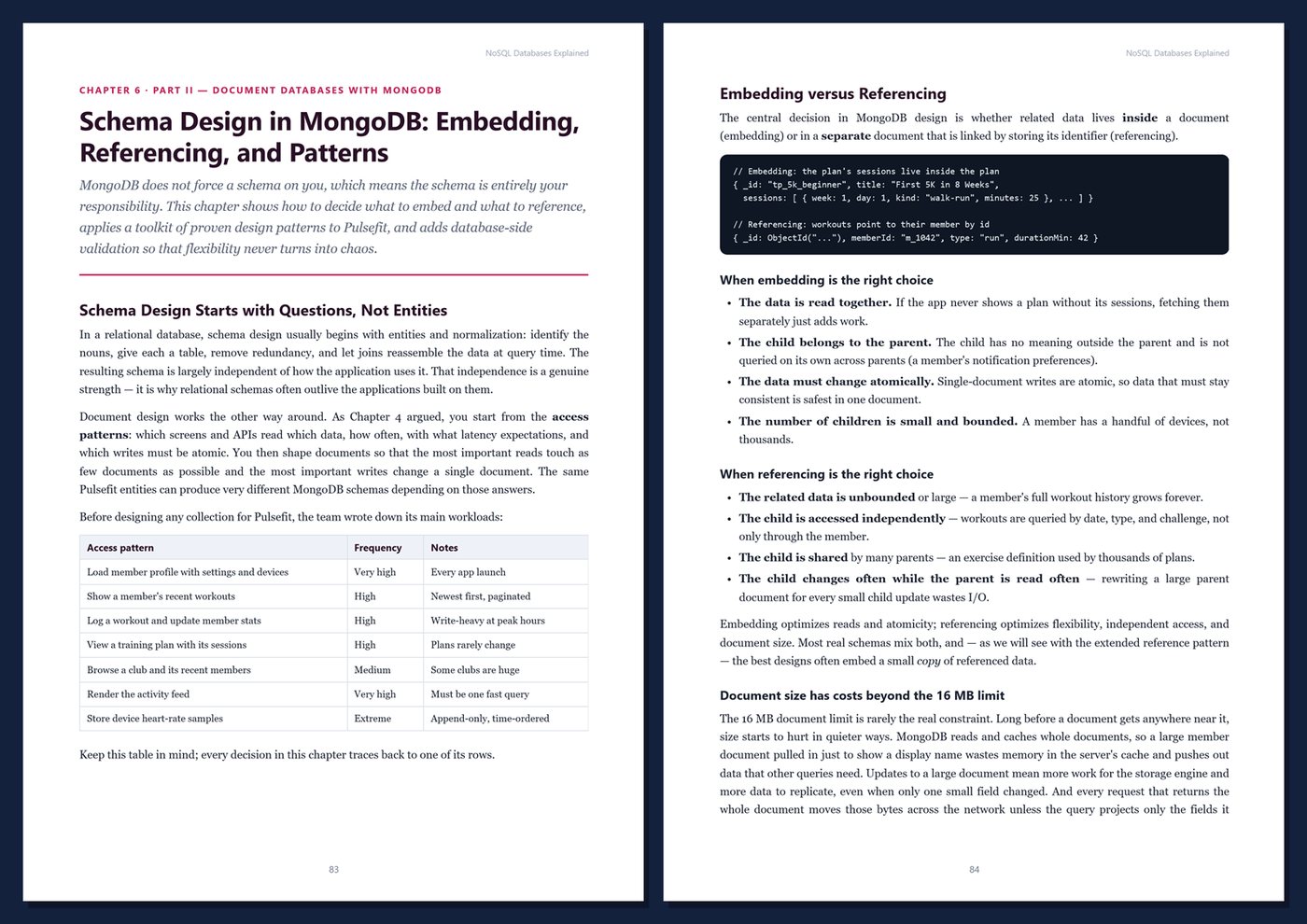
- Ch 6 · Schema Design in MongoDB: Embedding, Referencing, and Patterns
- Ch 7 · Querying and Aggregation in MongoDB
- Ch 8 · Indexes, Performance, and Transactions in MongoDB
- Ch 9 · Replication, Sharding, and Operating MongoDB
Part III — Key-Value and In-Memory Databases
- Ch 10 · Redis Fundamentals: Data Structures and Commands
- Ch 11 · Redis Patterns: Caching, Sessions, Rate Limiting, Leaderboards, and Streams
- Ch 12 · Redis Persistence, Replication, and Clustering
- Ch 13 · Amazon DynamoDB: Keys, Indexes, and Single-Table Design
Part IV — Wide-Column, Graph, Search, Time-Series, and Vector Databases
- Ch 14 · Apache Cassandra: Architecture and Data Modeling
- Ch 15 · CQL, Consistency Levels, and Operating Cassandra
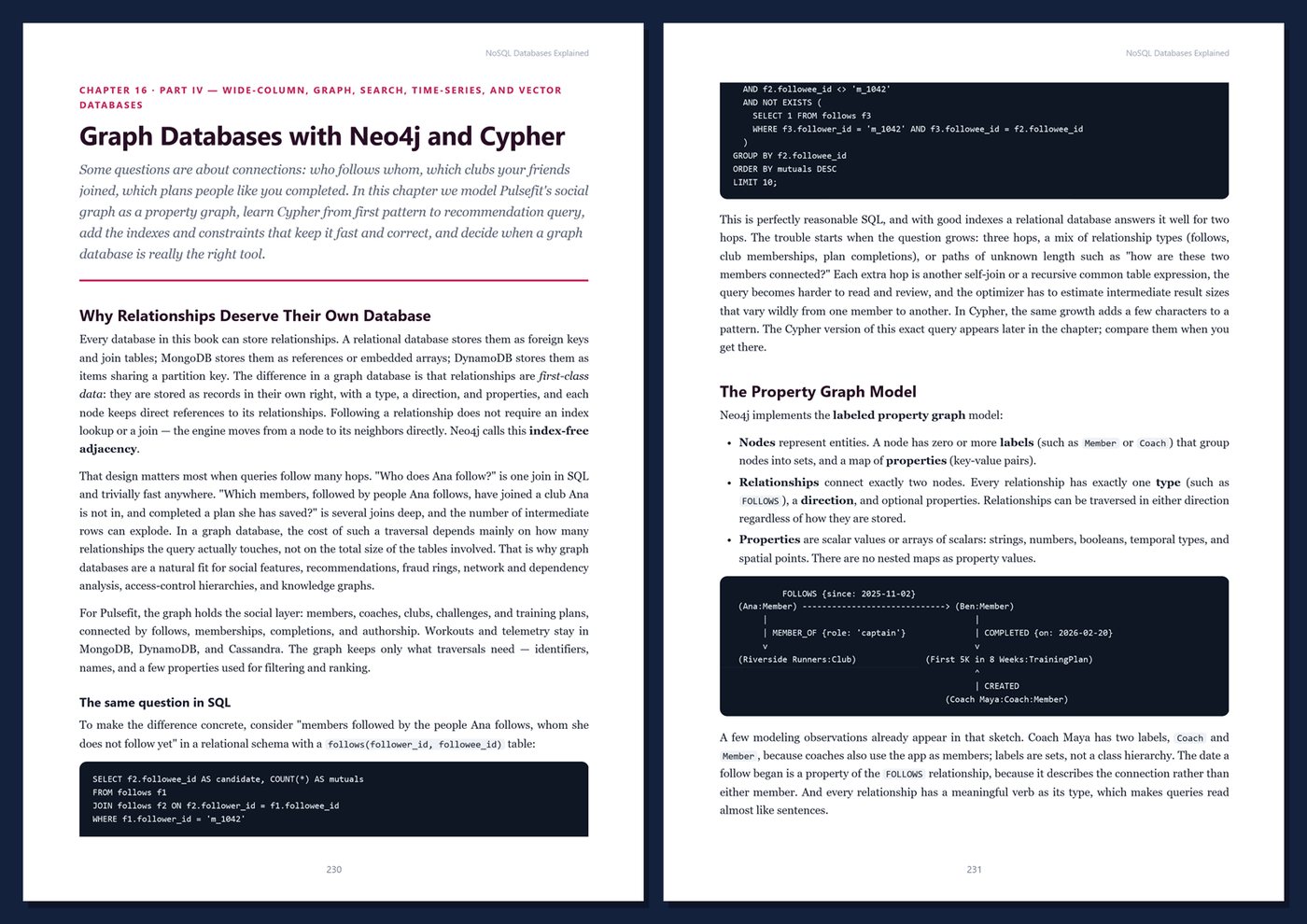
- Ch 16 · Graph Databases with Neo4j and Cypher
- Ch 17 · Search Engines as Databases: Elasticsearch and OpenSearch
- Ch 18 · Time-Series Databases
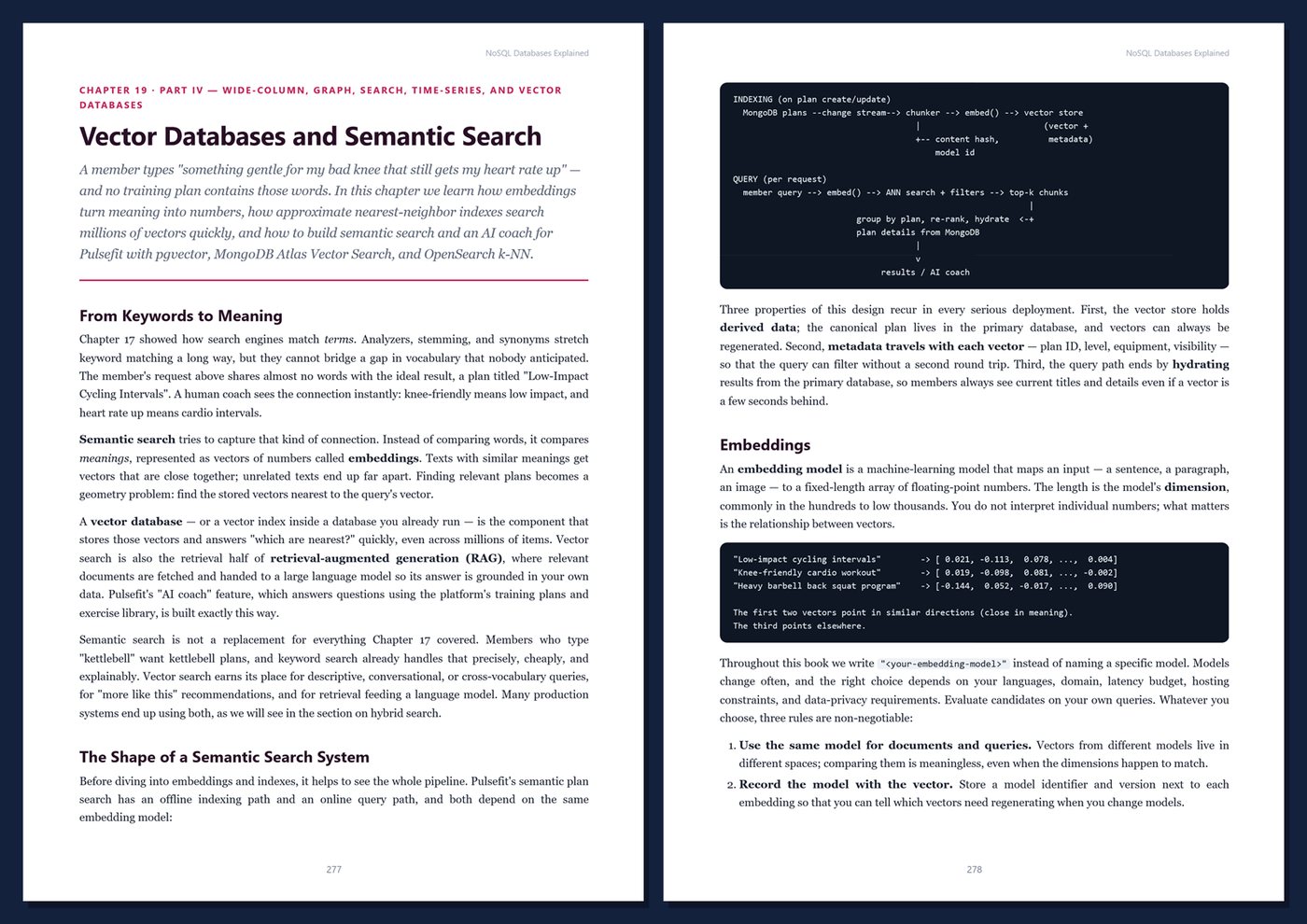
- Ch 19 · Vector Databases and Semantic Search
Part V — Building Applications with NoSQL
- Ch 20 · Choosing the Right Database: A Decision Framework
- Ch 21 · NoSQL in Application Code: Drivers, ODMs, and Connection Management
- Ch 22 · Data Migration, Schema Evolution, and Change Data Capture
- Ch 23 · Security, Backup, and Disaster Recovery
- Ch 24 · Performance, Monitoring, and Troubleshooting
Part VI — Real-World Projects
- Ch 25 · Project: Pulsefit Profiles, Workouts, and Activity Feed with MongoDB
- Ch 26 · Project: Pulsefit Real-Time Leaderboards, Sessions, and Rate Limiting with Redis
- Ch 27 · Project: Pulsefit at Scale — DynamoDB Challenges and Cassandra Telemetry
- Ch 28 · Project: Polyglot Pulsefit — Graph Recommendations, Search, Vectors, and Next Steps
Appendices
- App A · NoSQL Command Cheat Sheet
- App B · Data Modeling Templates and Reference
- App C · Production Checklist
- App D · Glossary
WHO IT IS FOR
Backend and full-stack developers choosing databases, developers who know SQL and want to learn how NoSQL thinks, data engineers and architects designing polyglot systems, and students preparing for system design interviews.
FORMAT
PDF (A4), 464 pages, English, clickable table of contents and PDF bookmarks. 1st Edition, 2026. Published by thenexbooks. Independent publication — not affiliated with or endorsed by any database vendor.
Book details
| Detail | |
|---|---|
| Pages | 464 |
| Format | PDF (A4), clickable contents + bookmarks |
| Language | English |
| Level | Beginner to Intermediate |
| Edition | 1st Edition, 2026 |
| Download on this site | Free sample, first 20 pages (PDF) |
| Publisher | thenexbooks |
Files you get
No reviews yet. Only buyers can review.
More from thenexbooks