 1 / 11
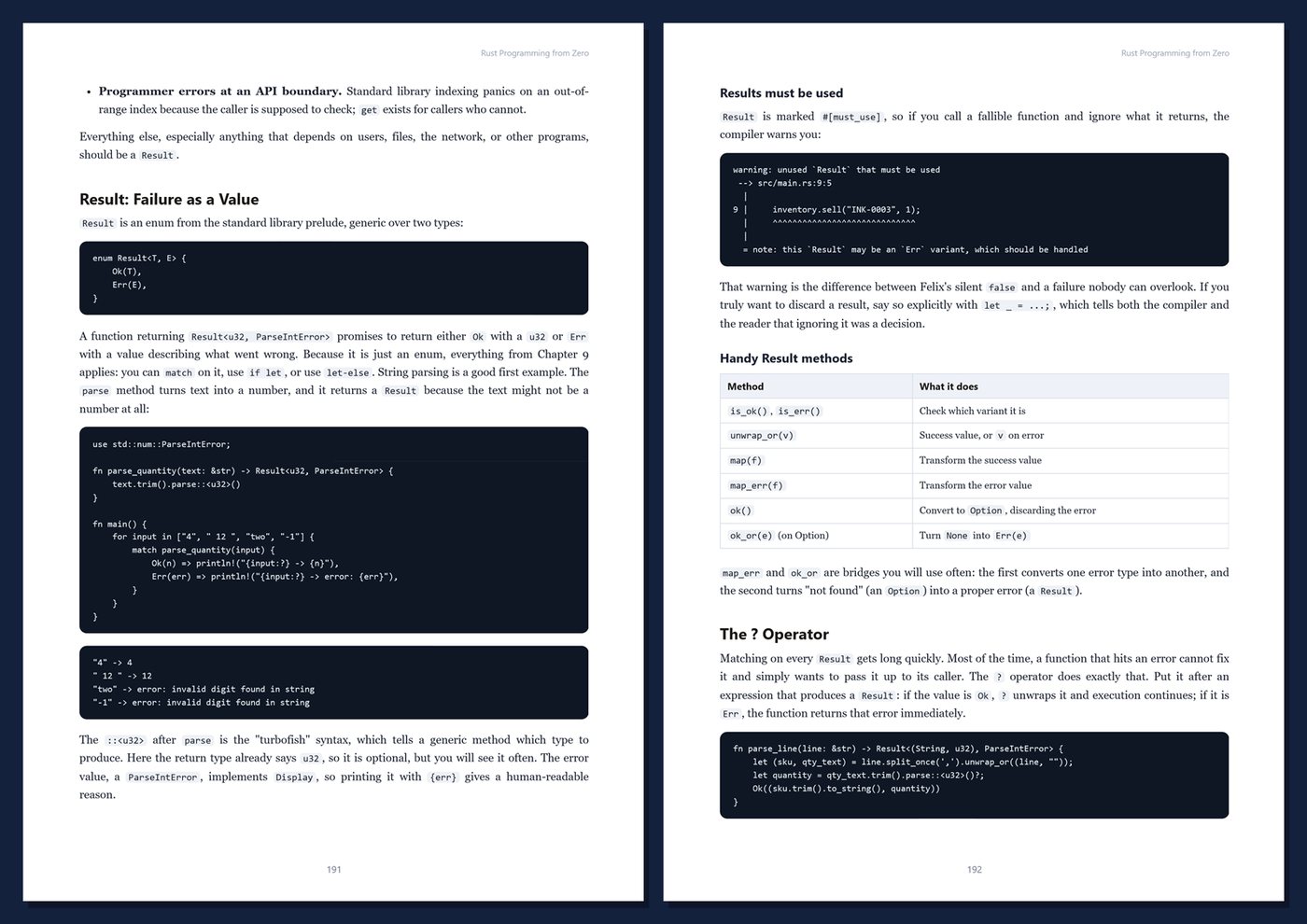
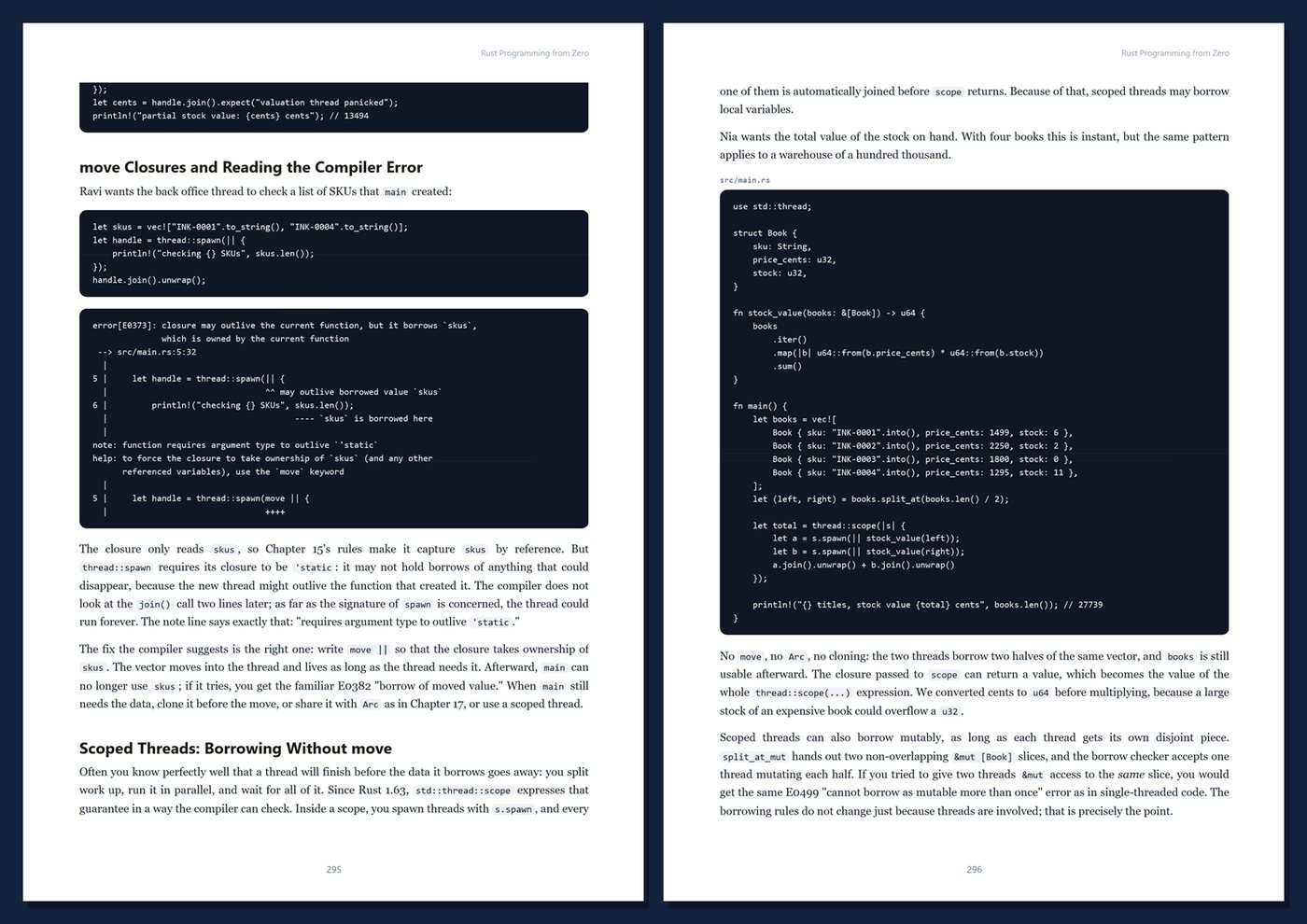
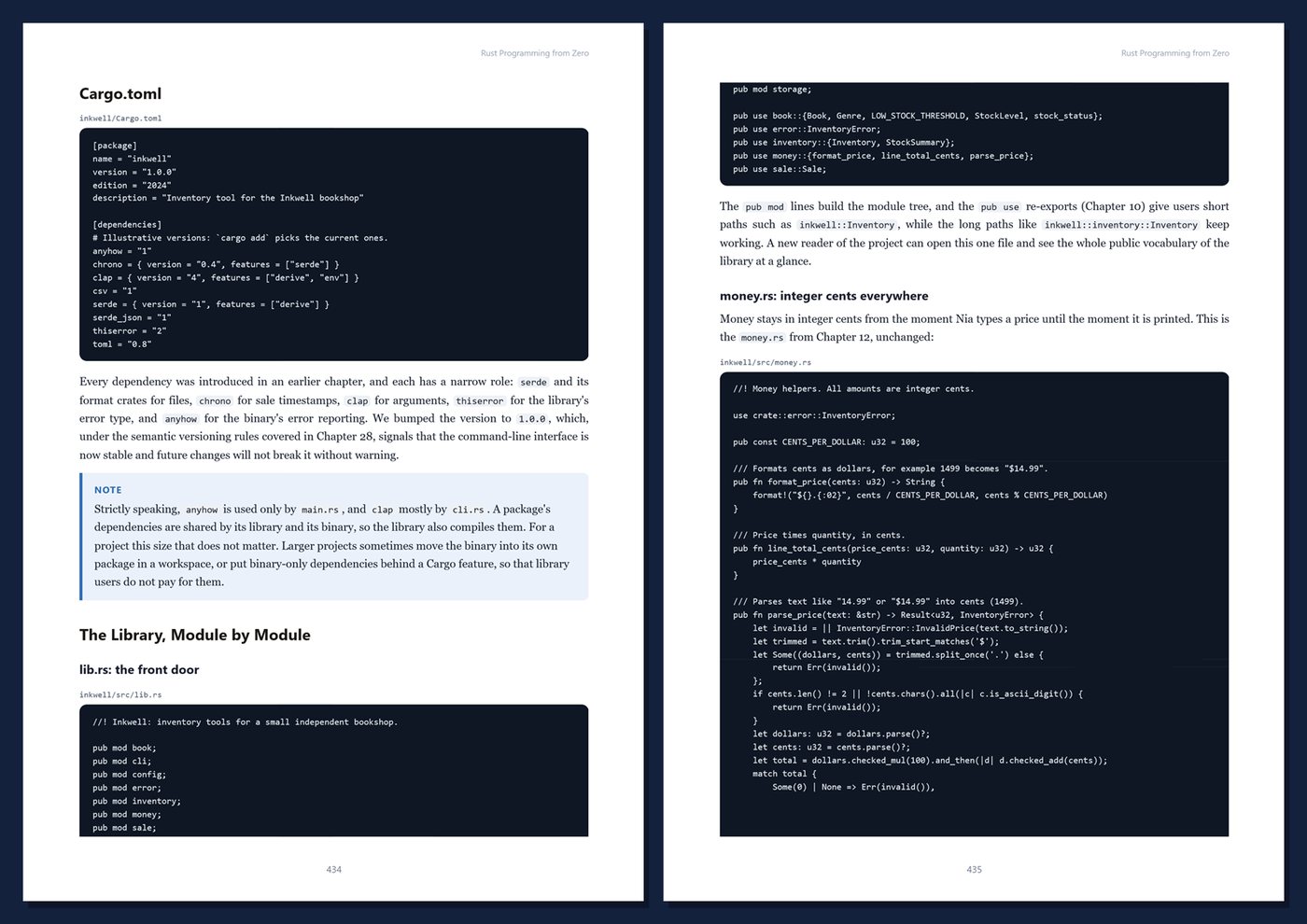
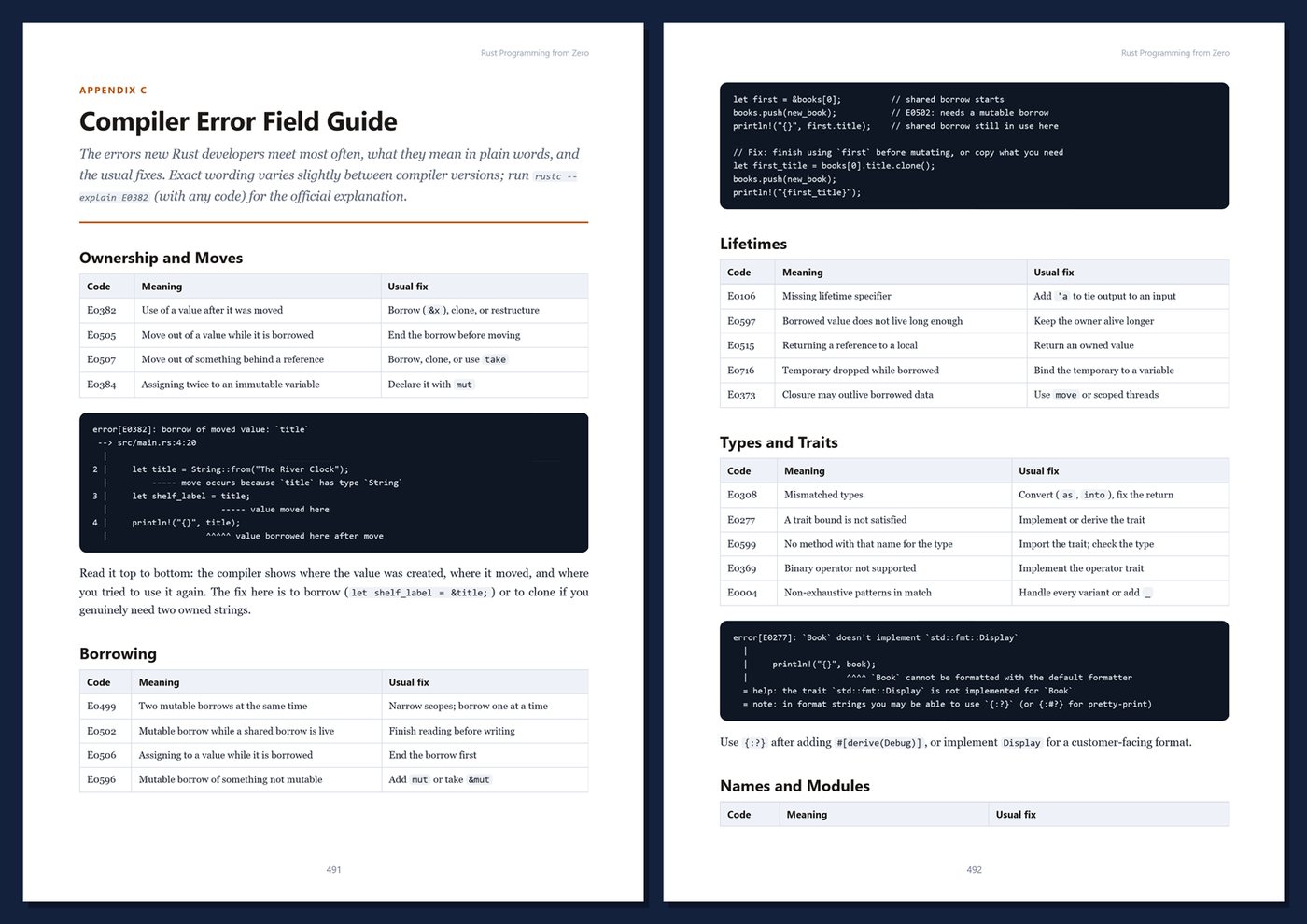
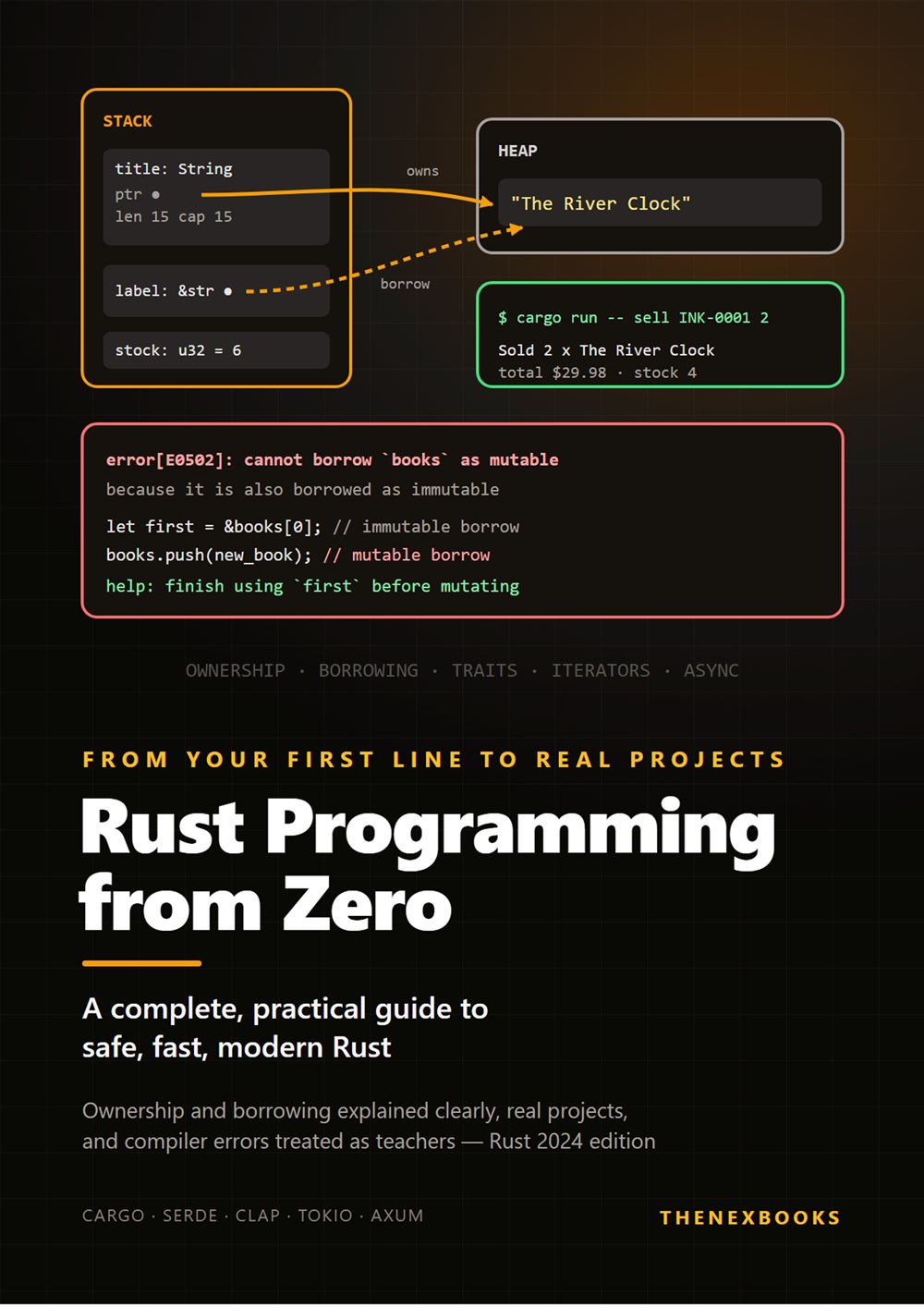
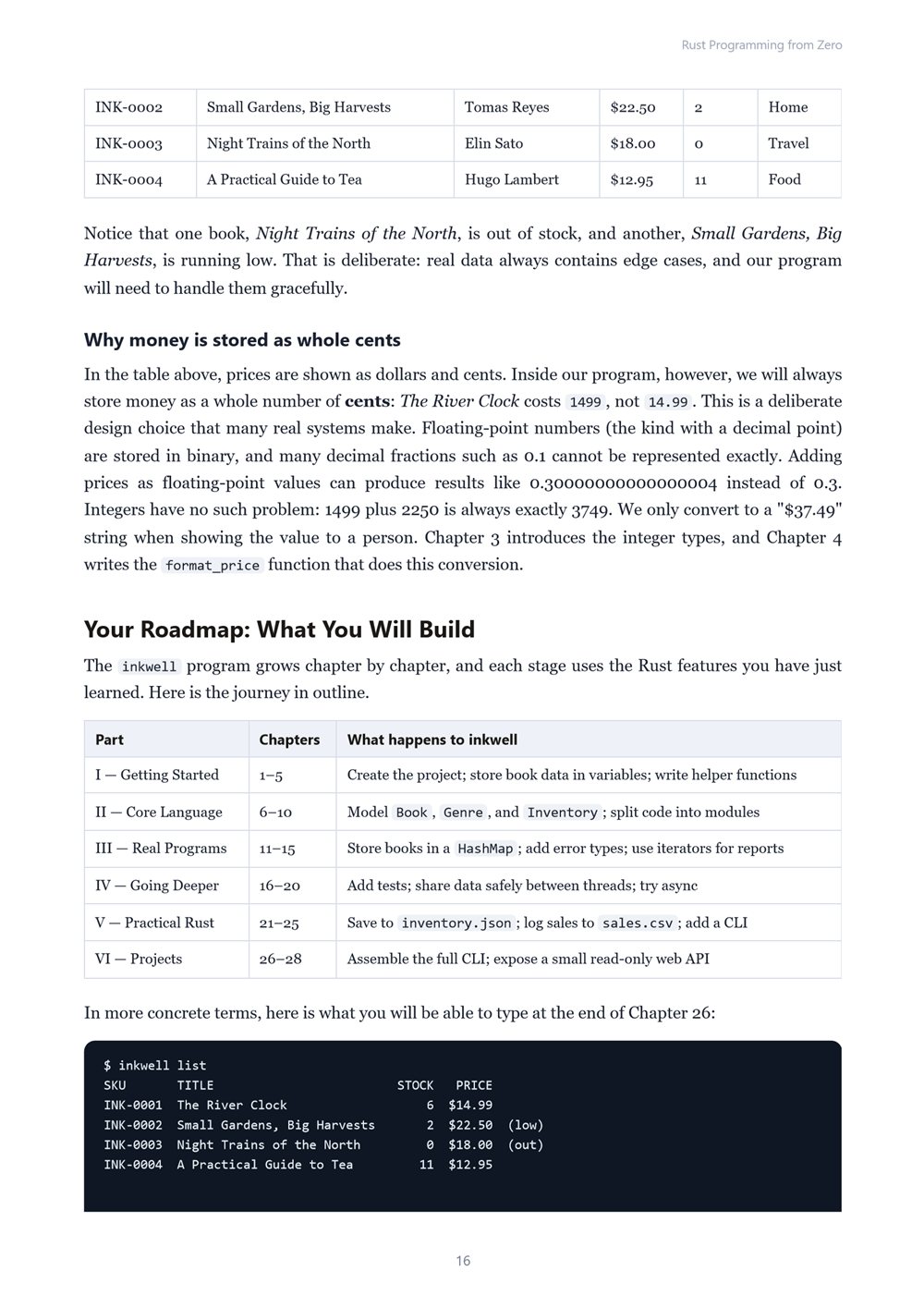
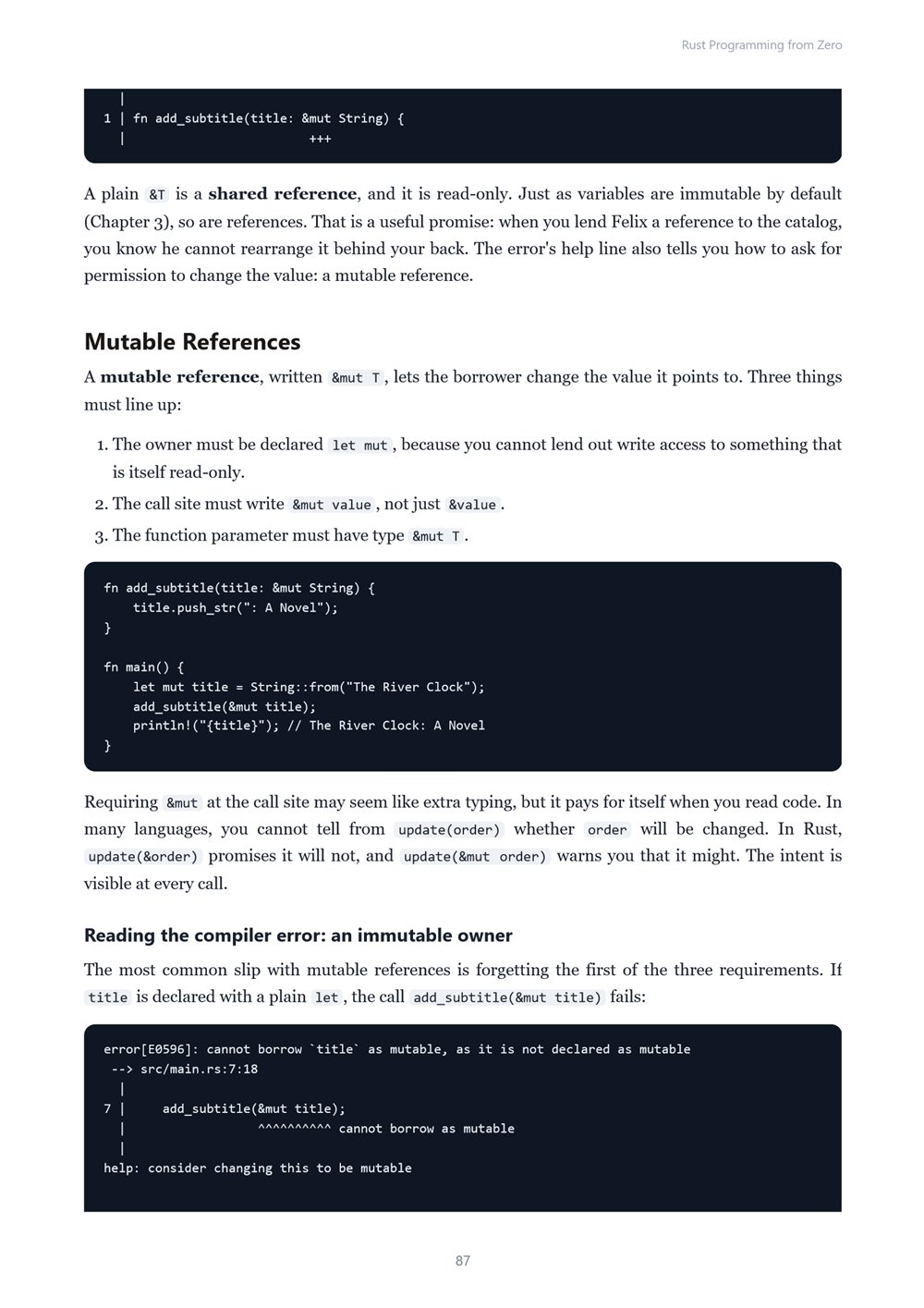
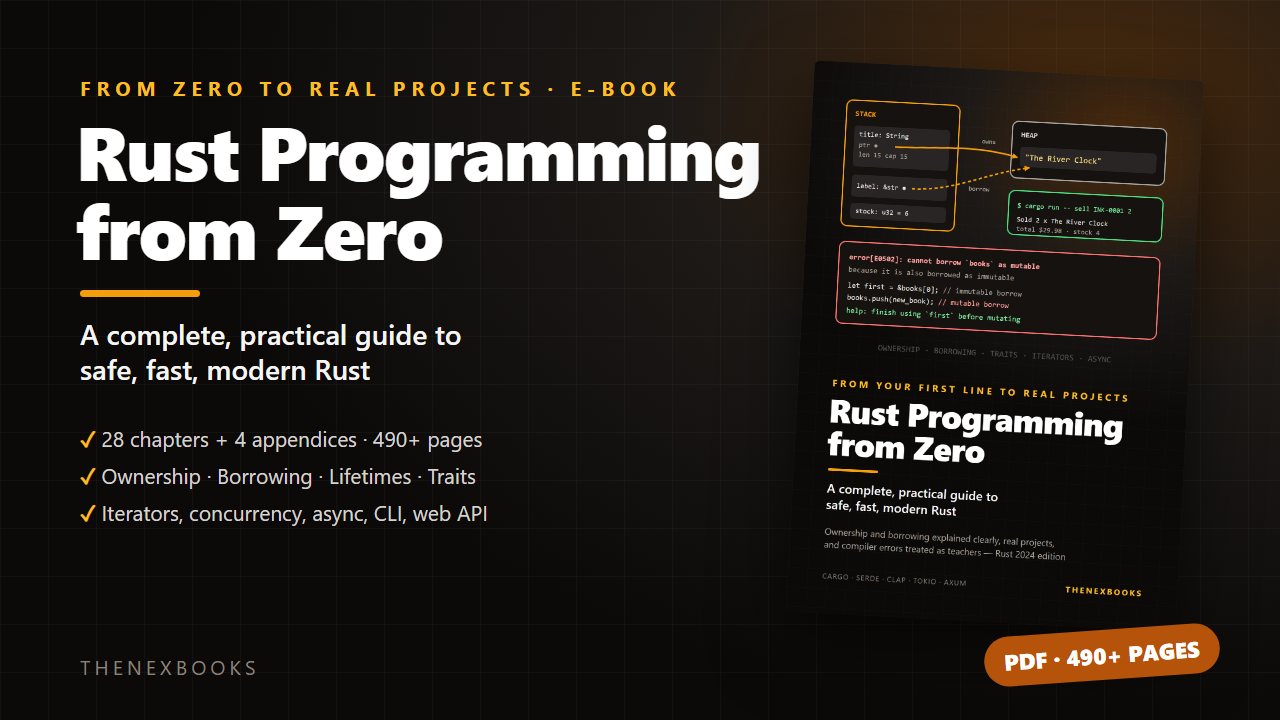
A 495-page, practical guide to learning Rust from zero — ownership, borrowing, lifetimes, traits, iterators, error handling, concurrency, async, and two complete projects — for the Rust 2024 edition.
A Complete, Practical Guide to Safe, Fast, Modern Rust
Read before you buy: the PDF here is a free sample — the first 20 pages of the 495-page book (payments, sales and reviews on this demo site are sample data). Get the full e-book at thenexbooks on Gumroad.
Rust has a reputation for being hard. It doesn't have to be.
Rust asks you to think about things other languages let you ignore — who owns a piece of data, how long it lives, and who may change it. Once those ideas click, you get programs that are fast, free of null-pointer crashes and data races, and safe to change because the compiler checks so much for you. This book is designed to make those ideas click.
We start from zero — installing Rust and writing your first program — and build up one concept at a time, always explaining why Rust works the way it does. When the compiler rejects your code, we read the error together and treat it as a teacher. Along the way you grow "inkwell", an inventory tool for a small fictional bookshop, from a few variables into a complete, tested command-line application with a small web API.
- 495 pages · 28 chapters + 4 appendices · practice exercises in every chapter
- rustup, Cargo, rust-analyzer, Clippy, and rustfmt
- Variables, types, functions, control flow, and expressions
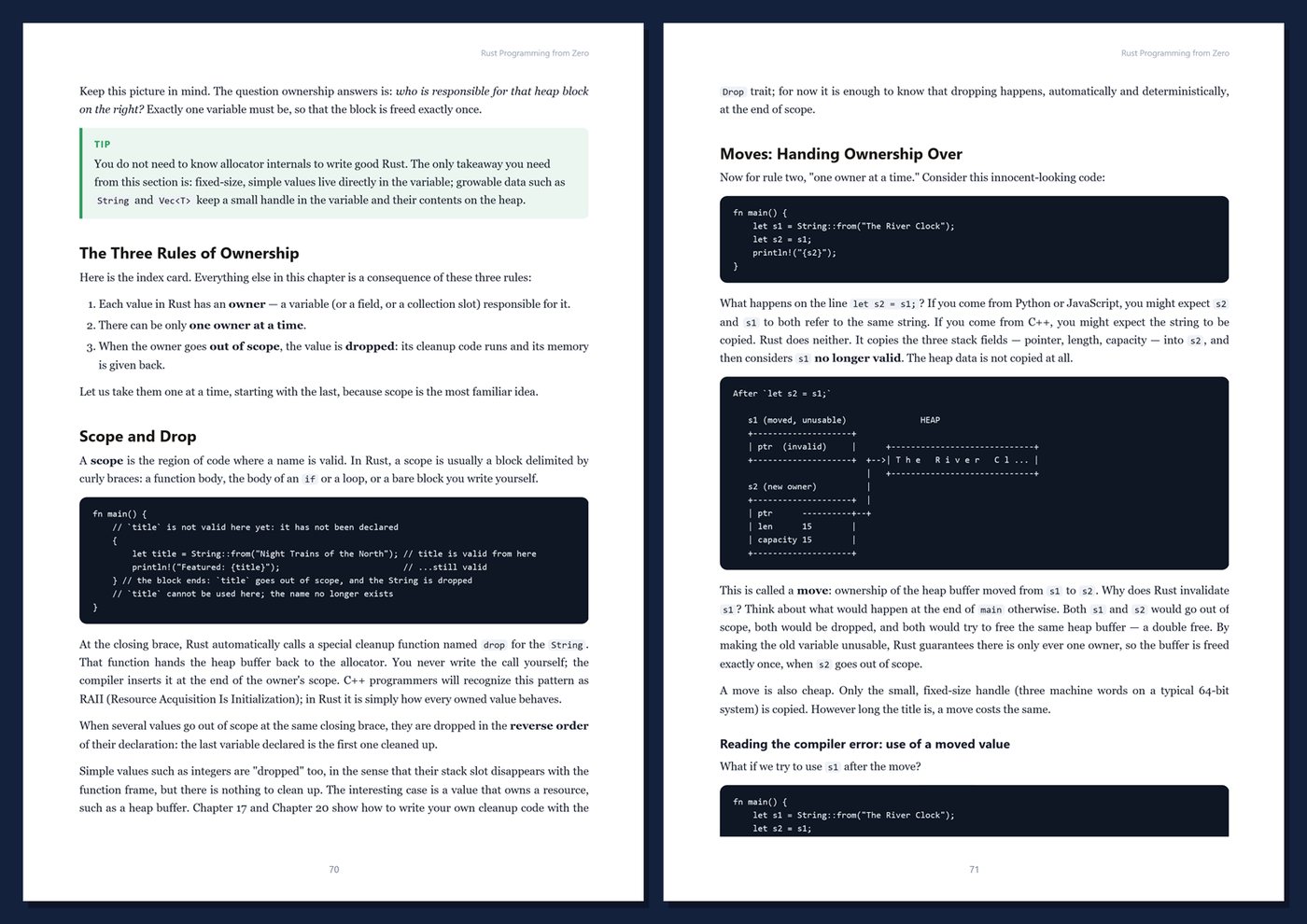
- Ownership, borrowing, references, slices, and lifetimes — explained with diagrams
- Structs, enums, pattern matching, modules, and collections
- Error handling with Result, the ? operator, thiserror, and anyhow
- Generics, traits, closures, and iterators
- Testing, smart pointers (Box, Rc, RefCell, Arc), threads, channels, and async with Tokio
- Files and I/O, Serde (JSON, TOML, CSV), command-line tools with clap, macros, unsafe Rust and FFI
- Two projects: a complete CLI and a small Axum web API
- A compiler error field guide that explains the errors beginners meet most often
- Written for the Rust 2024 edition on recent stable Rust
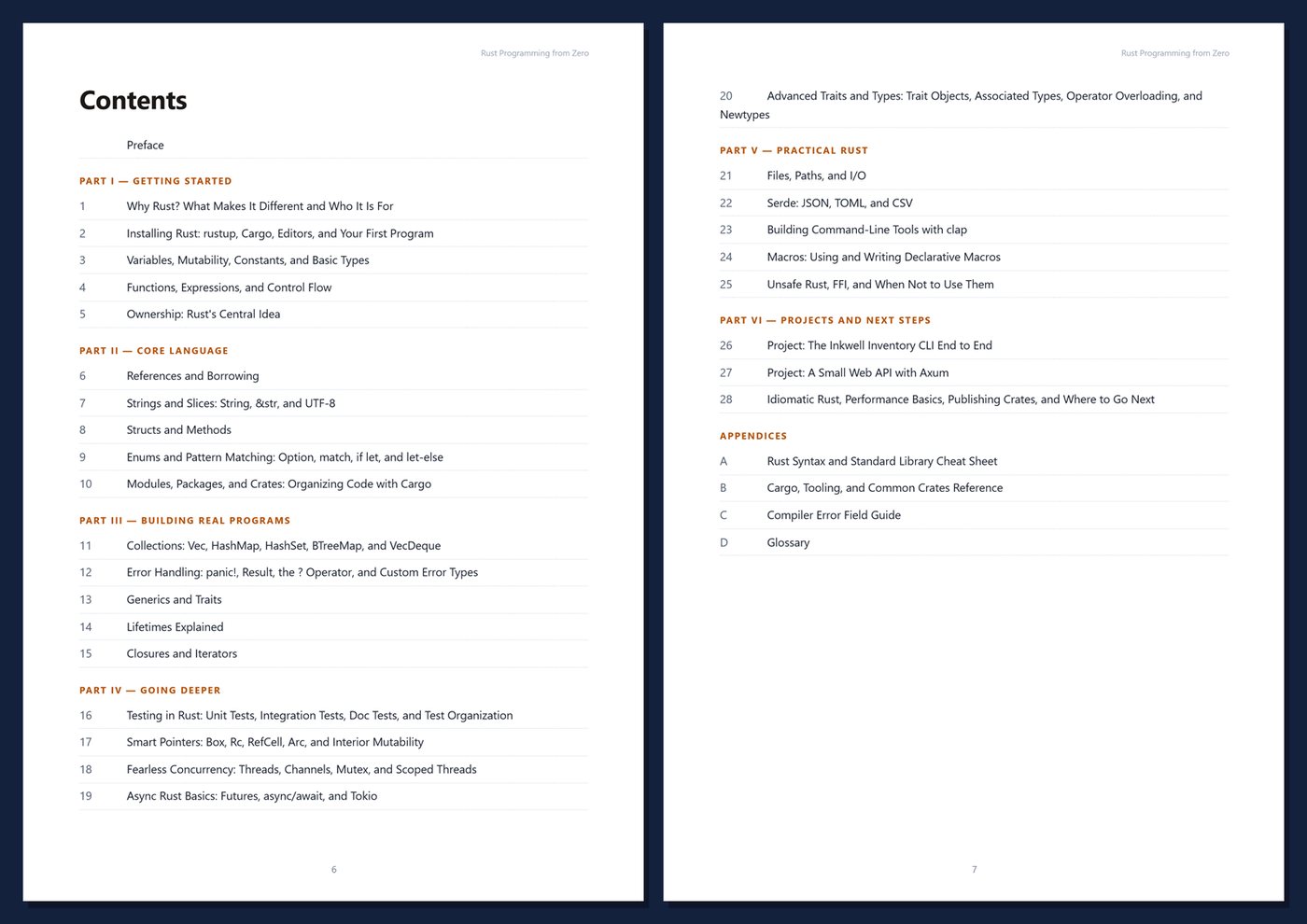
Table Of Contents
Part I — Getting Started
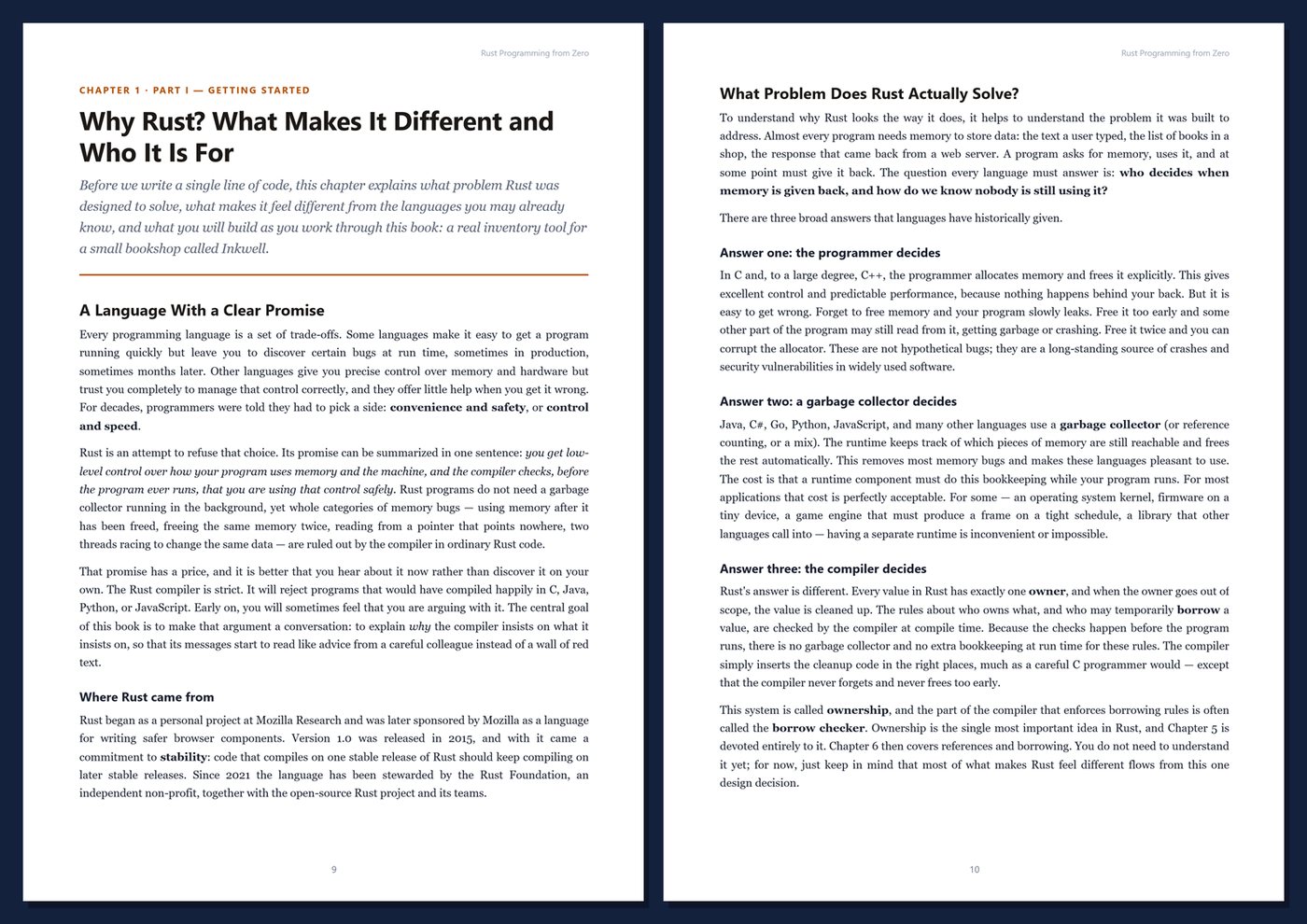
- Ch 1 · Why Rust? What Makes It Different and Who It Is For
- Ch 2 · Installing Rust: rustup, Cargo, Editors, and Your First Program
- Ch 3 · Variables, Mutability, Constants, and Basic Types
- Ch 4 · Functions, Expressions, and Control Flow
- Ch 5 · Ownership: Rust's Central Idea
Part II — Core Language
- Ch 6 · References and Borrowing
- Ch 7 · Strings and Slices: String, &str, and UTF-8
- Ch 8 · Structs and Methods
- Ch 9 · Enums and Pattern Matching: Option, match, if let, and let-else
- Ch 10 · Modules, Packages, and Crates: Organizing Code with Cargo
Part III — Building Real Programs
- Ch 11 · Collections: Vec, HashMap, HashSet, BTreeMap, and VecDeque
- Ch 12 · Error Handling: panic!, Result, the ? Operator, and Custom Error Types
- Ch 13 · Generics and Traits
- Ch 14 · Lifetimes Explained
- Ch 15 · Closures and Iterators
Part IV — Going Deeper
- Ch 16 · Testing in Rust: Unit Tests, Integration Tests, Doc Tests, and Test Organization
- Ch 17 · Smart Pointers: Box, Rc, RefCell, Arc, and Interior Mutability
- Ch 18 · Fearless Concurrency: Threads, Channels, Mutex, and Scoped Threads
- Ch 19 · Async Rust Basics: Futures, async/await, and Tokio
- Ch 20 · Advanced Traits and Types: Trait Objects, Associated Types, Operator Overloading, and Newtypes
Part V — Practical Rust
- Ch 21 · Files, Paths, and I/O
- Ch 22 · Serde: JSON, TOML, and CSV
- Ch 23 · Building Command-Line Tools with clap
- Ch 24 · Macros: Using and Writing Declarative Macros
- Ch 25 · Unsafe Rust, FFI, and When Not to Use Them
Part VI — Projects and Next Steps
- Ch 26 · Project: The Inkwell Inventory CLI End to End
- Ch 27 · Project: A Small Web API with Axum
- Ch 28 · Idiomatic Rust, Performance Basics, Publishing Crates, and Where to Go Next
Appendices
- App A · Rust Syntax and Standard Library Cheat Sheet
- App B · Cargo, Tooling, and Common Crates Reference
- App C · Compiler Error Field Guide
- App D · Glossary
WHO IT IS FOR
Developers who know another language (Python, JavaScript, Java, Go, C#, or C/C++) and want to learn Rust properly; motivated beginners with a little programming experience; students and self-learners curious about systems programming; and engineers evaluating Rust for their team. Want to build production web services next? The companion title "Rust for Backend Developers" picks up where this book leaves off.
FORMAT
PDF (A4), 495 pages, English, clickable table of contents and PDF bookmarks. 1st Edition, 2026. Published by thenexbooks.
This book is independent and is not affiliated with, sponsored by, or endorsed by the Rust Foundation or the Rust Project. Rust and Cargo are trademarks of the Rust Foundation.
Book details
| Detail | |
|---|---|
| Pages | 495 |
| Format | PDF (A4) |
| Language | English |
| Level | Beginner to Intermediate |
| Edition | 1st Edition, 2026 |
| Download on this site | Free sample, first 20 pages (PDF) |
| Publisher | thenexbooks |
Files you get
No reviews yet. Only buyers can review.
More from thenexbooks