 1 / 11
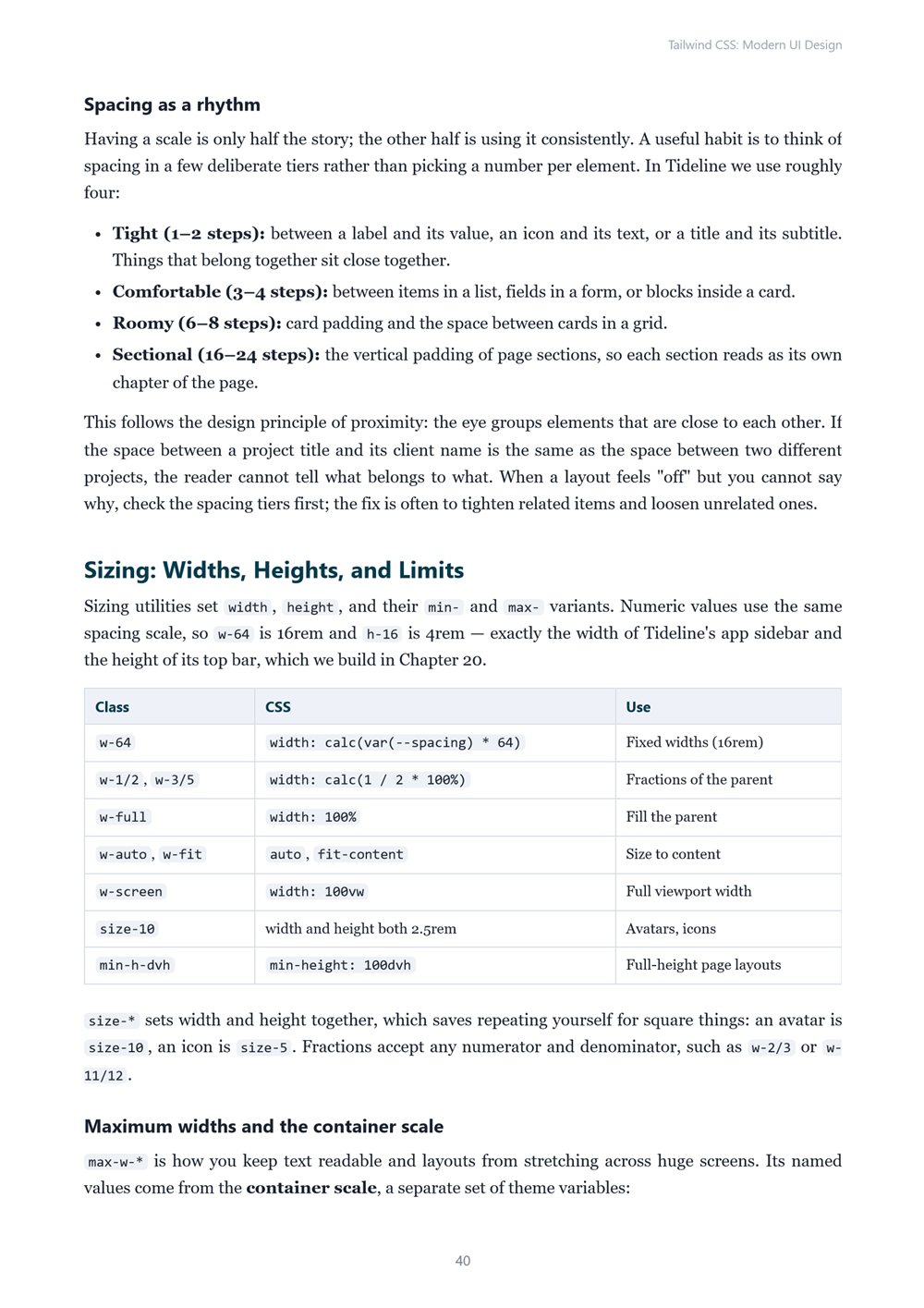
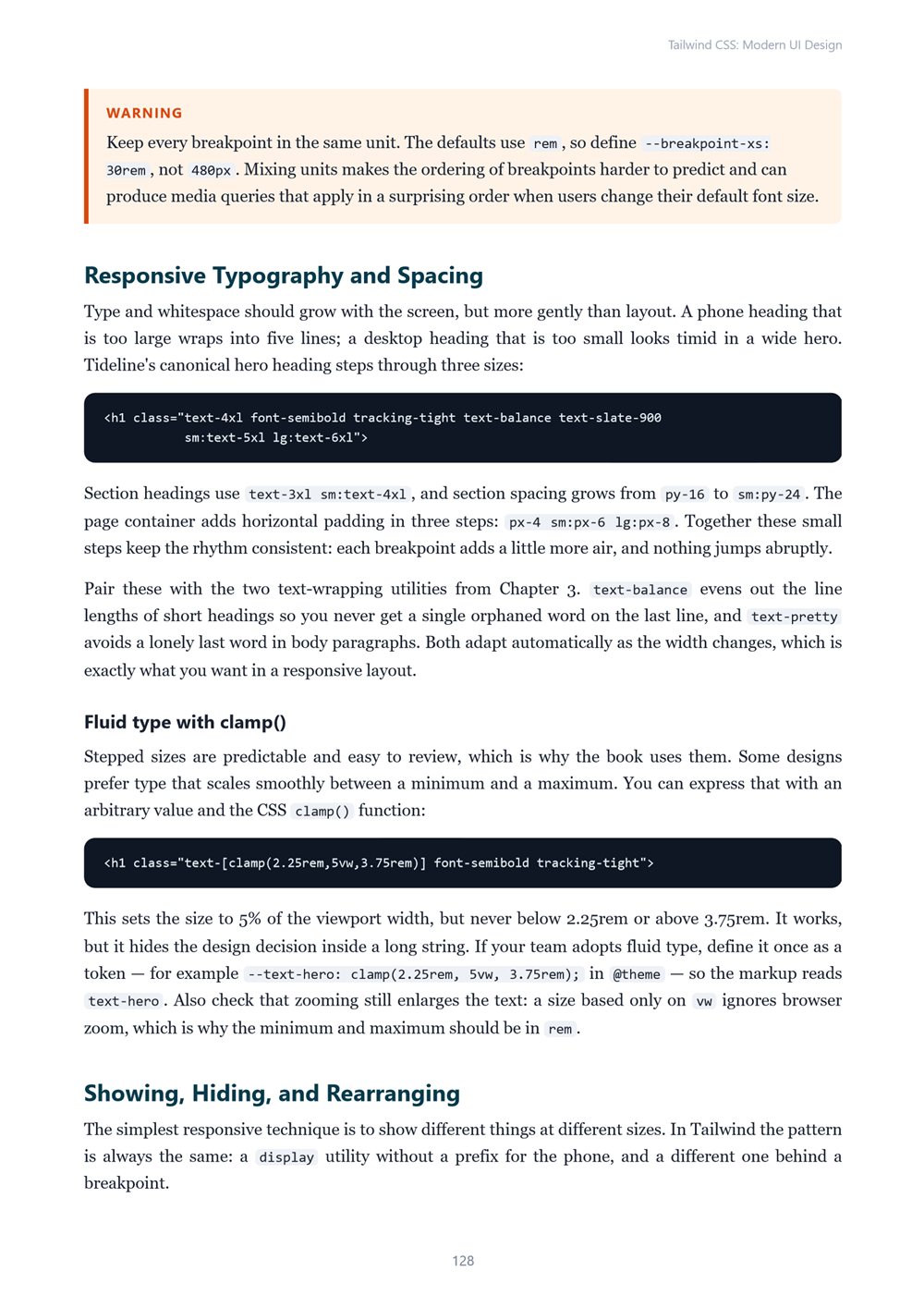
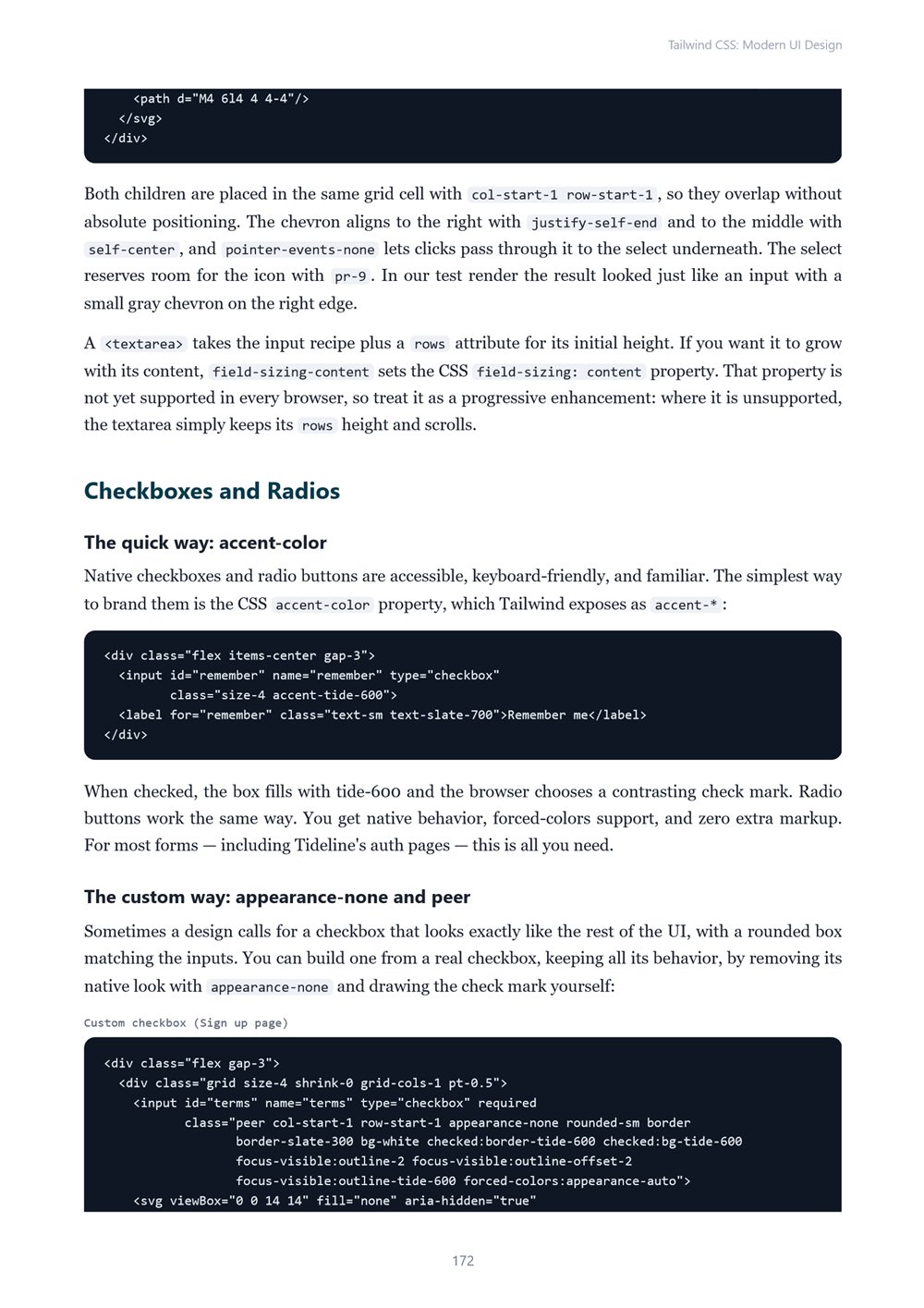
Learn Tailwind CSS v4 from your first utility class to a complete SaaS interface: utility-first thinking, setup with the CLI and Vite, core utilities, variants, @theme design tokens, flexbox and grid, mobile-first breakpoints and container queries, buttons, forms, cards, pricing tables…
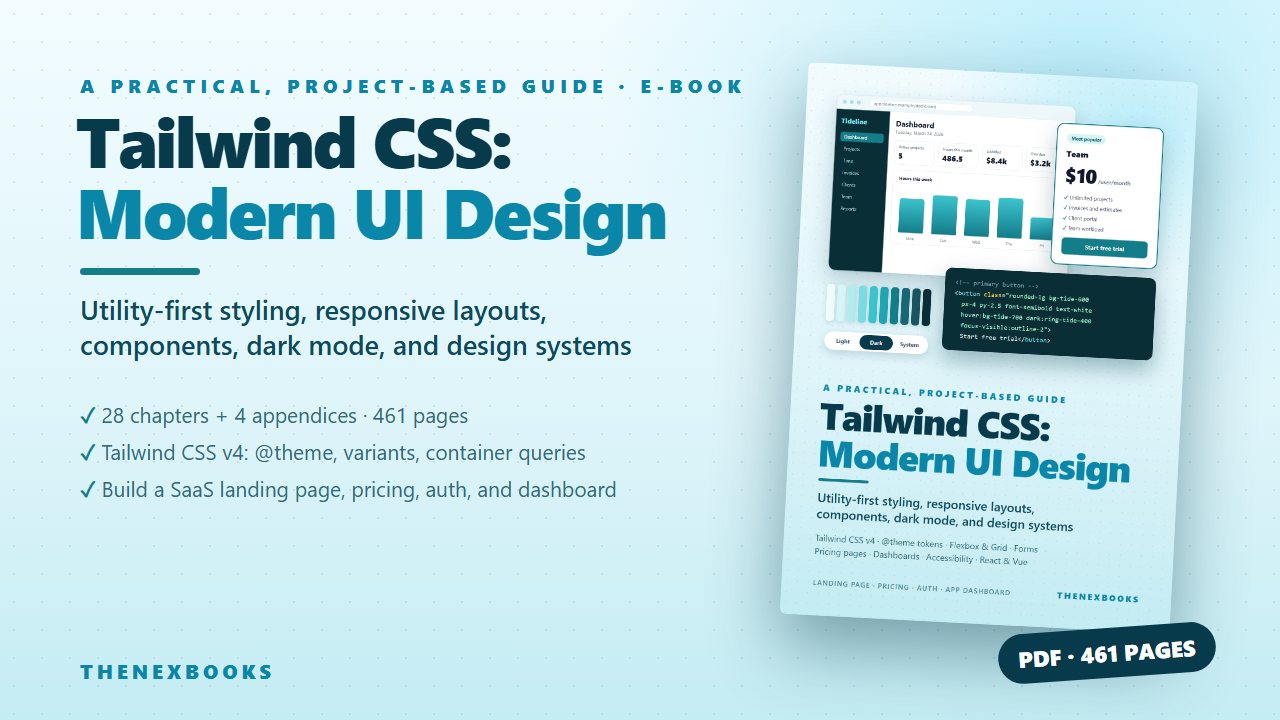
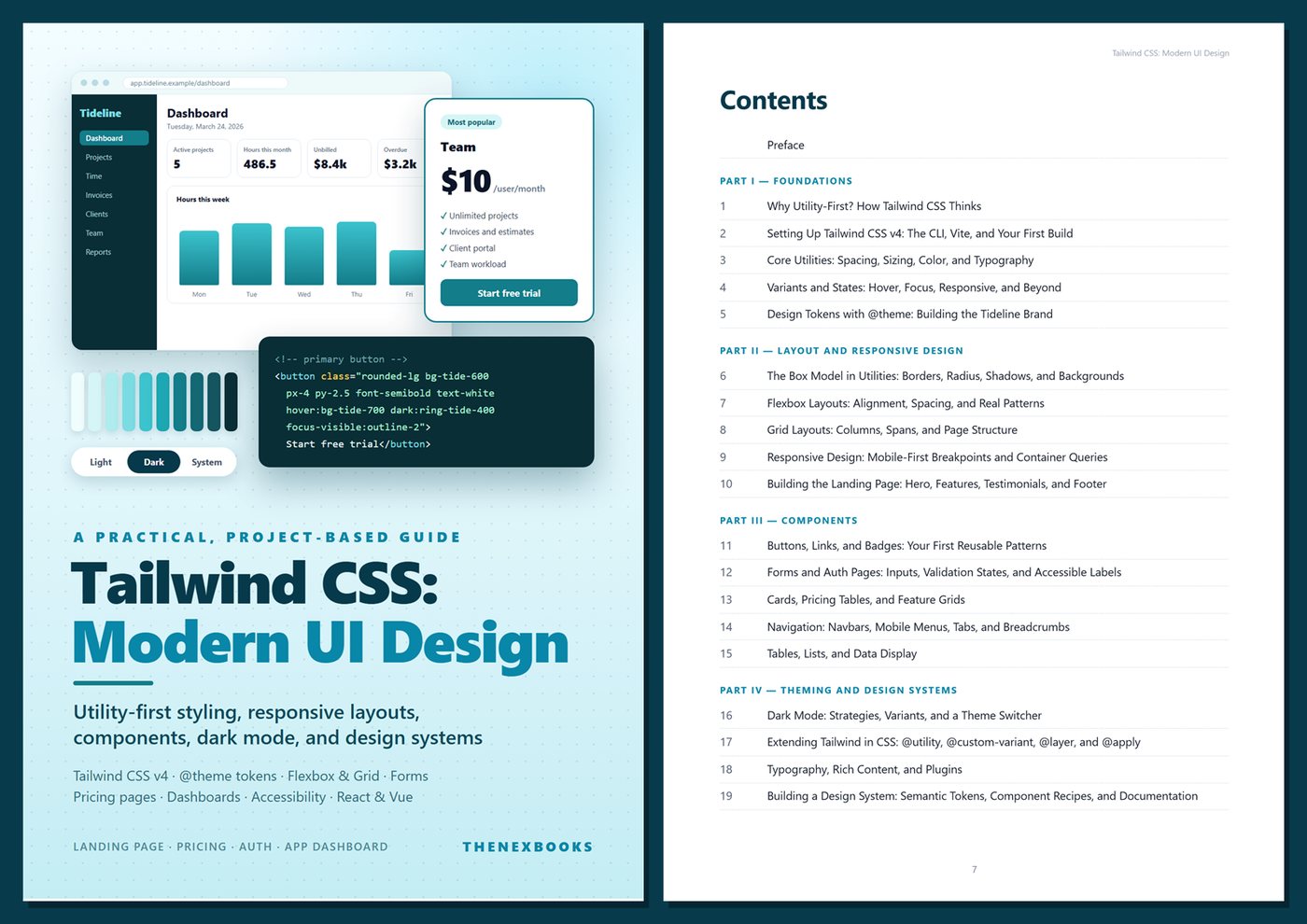
Modern UI Design: Utility-First Styling, Responsive Layouts, Components, Dark Mode, and Design Systems
Read before you buy: the PDF here is a free sample — the first 20 pages of the 461-page book (payments, sales and reviews on this demo site are sample data). Get the full e-book at thenexbooks on Gumroad.
Build modern, responsive, accessible interfaces faster — and understand every class you write.
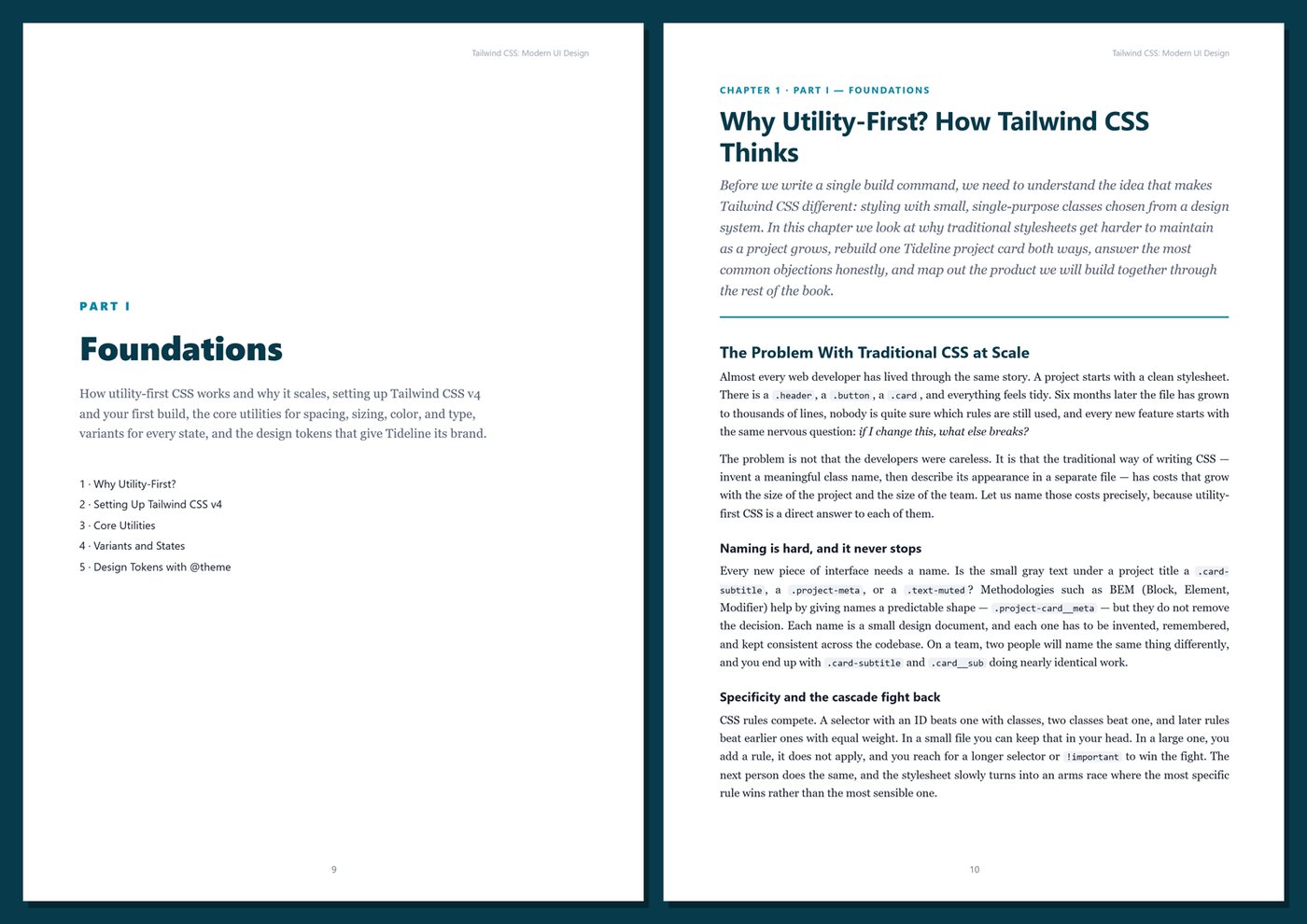
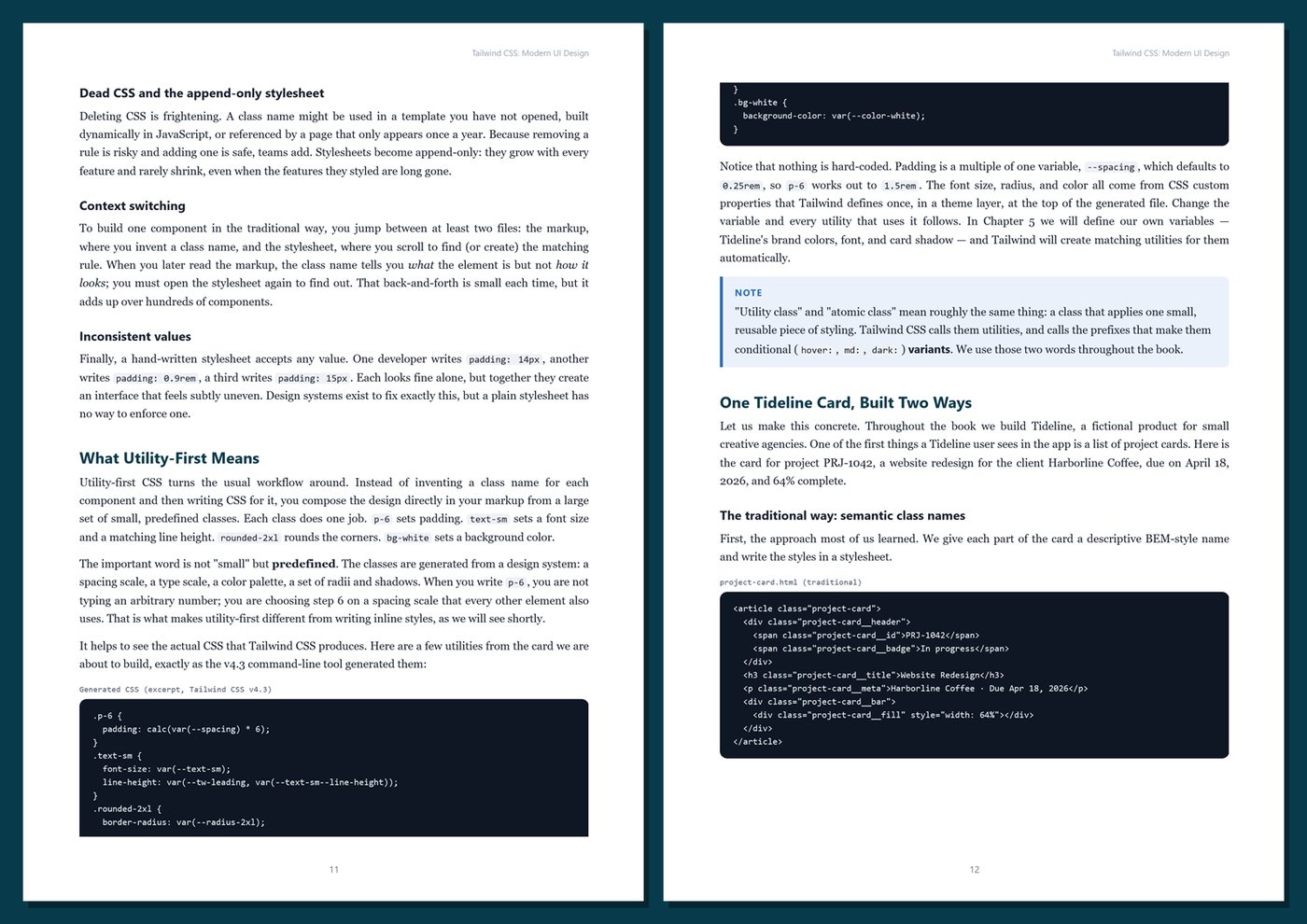
Hand-written CSS tends to start clean and end tangled: thousands of lines nobody dares to delete, naming debates, and one padding change that breaks a page you forgot existed. Tailwind CSS takes a different path. You compose interfaces from small utility classes that come from one consistent design system, write hover states, breakpoints, and dark mode right where the markup is, and ship only the CSS your project actually uses.
This book teaches Tailwind CSS v4 — the CSS-first version configured with @import and @theme — from the very beginning to a production-ready product interface. You build one realistic product step by step, every idea appears at the moment it solves a real design problem, and each utility is explained together with the CSS it produces, so you always know what the browser receives.
What's inside
- Why utility-first works, when it does not, and how Tailwind generates only the CSS you use
- Setting up Tailwind CSS v4 with the CLI, Vite, or PostCSS, and fixing "my class doesn't work" problems
- Core utilities for spacing, sizing, color, and typography, plus variants for hover, focus, groups, peers, ARIA, and data attributes
- Design tokens with @theme: a custom brand color scale, fonts, shadows, breakpoints, and animations in pure CSS
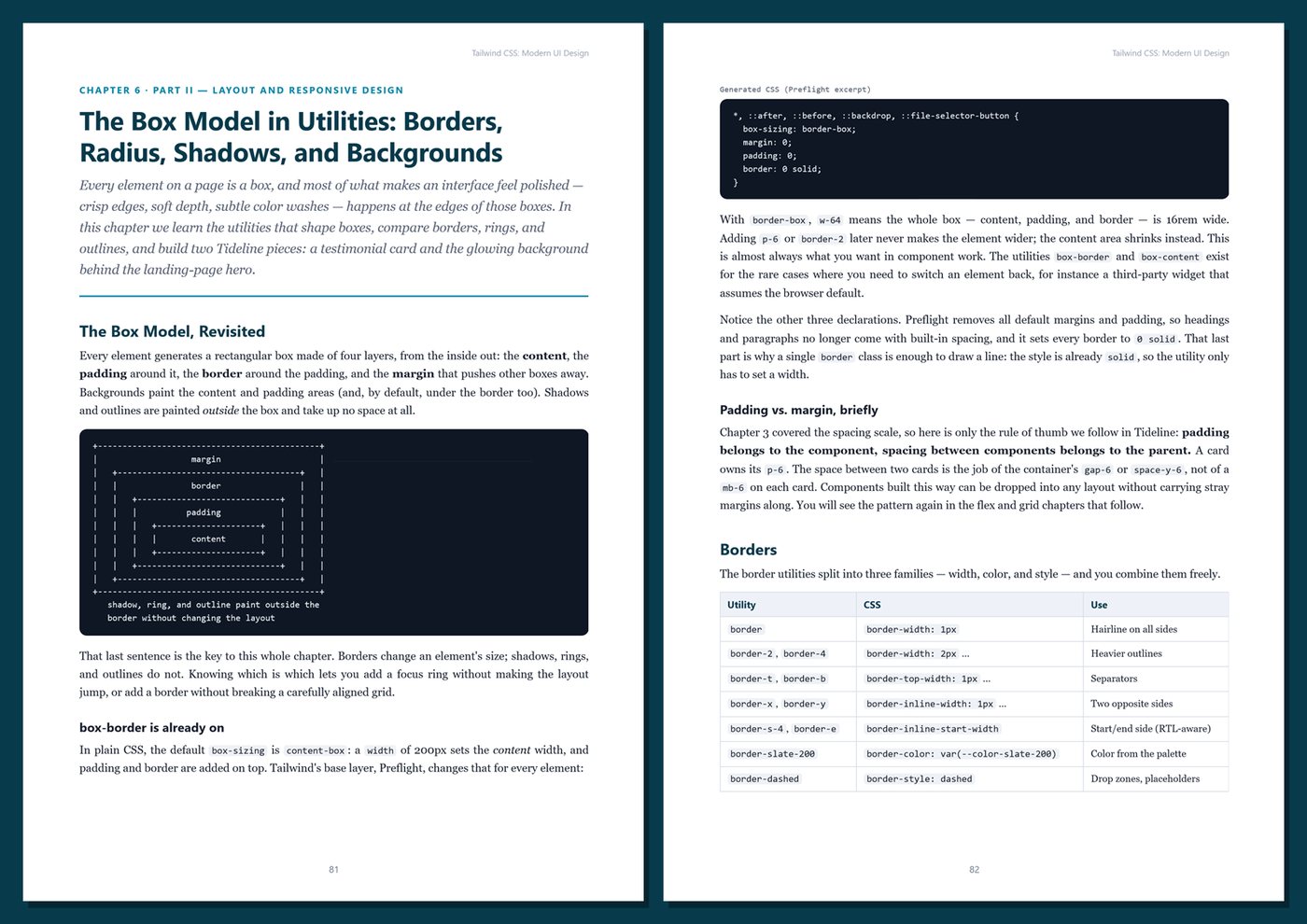
- Layout with the box model, flexbox, and grid, mobile-first breakpoints, and built-in container queries
- A complete landing page: hero, feature grid, testimonials, call to action, and footer
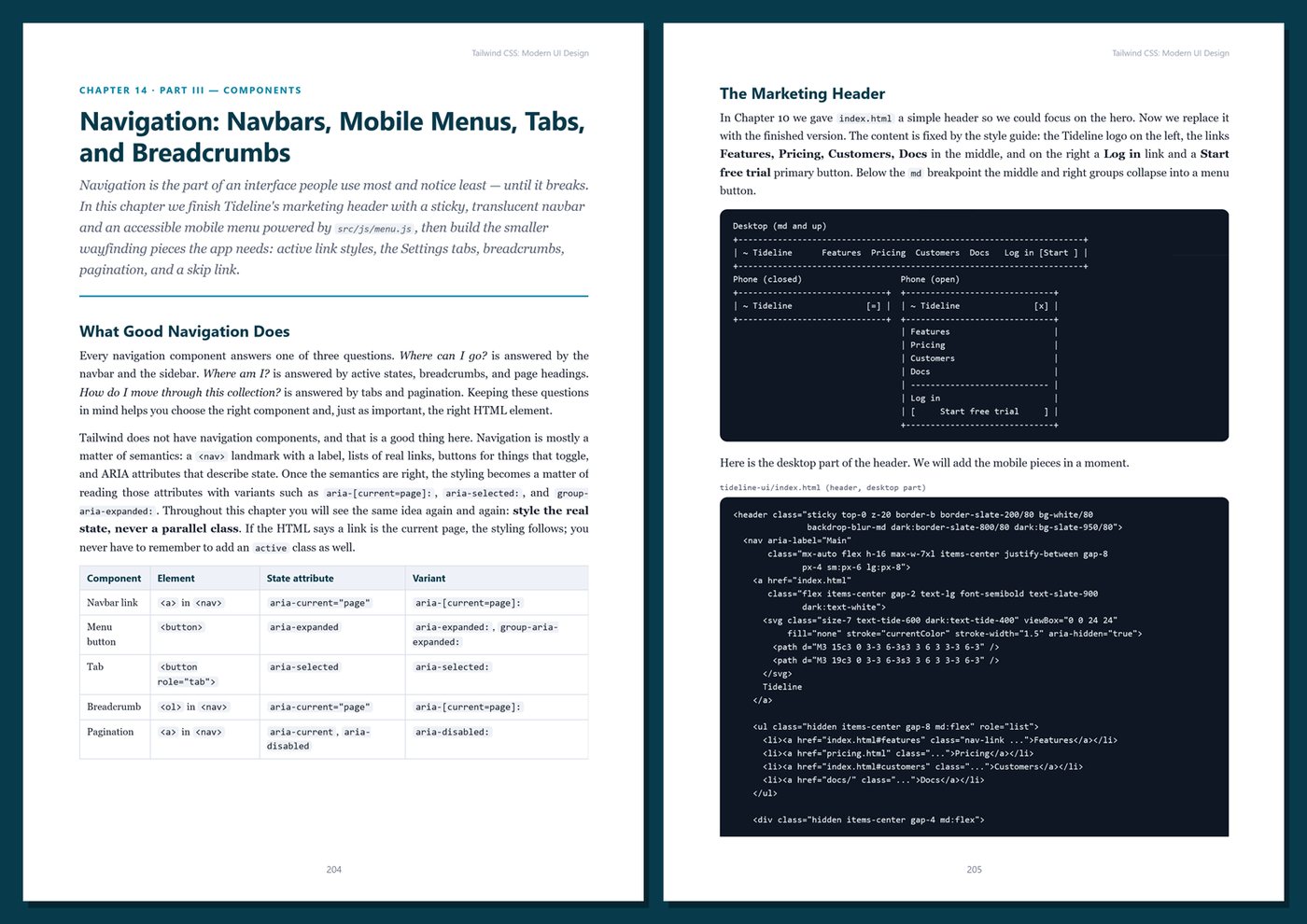
- Components: buttons, badges, accessible forms with validation states, auth pages, cards, pricing tables with a monthly/annual toggle, navbars, mobile menus, tabs, and responsive data tables
- Dark mode done properly: media, class, and data-attribute strategies, a flash-free theme switcher, and dark palettes that are designed, not inverted
- Extending Tailwind in CSS with @utility, @custom-variant, @layer, and @apply, plus typography and plugins
- A documented design system with semantic tokens, component recipes, and a living style guide
- The app UI: a responsive dashboard shell, KPI cards, a CSS bar chart, dialogs, popovers, dropdowns, and toasts
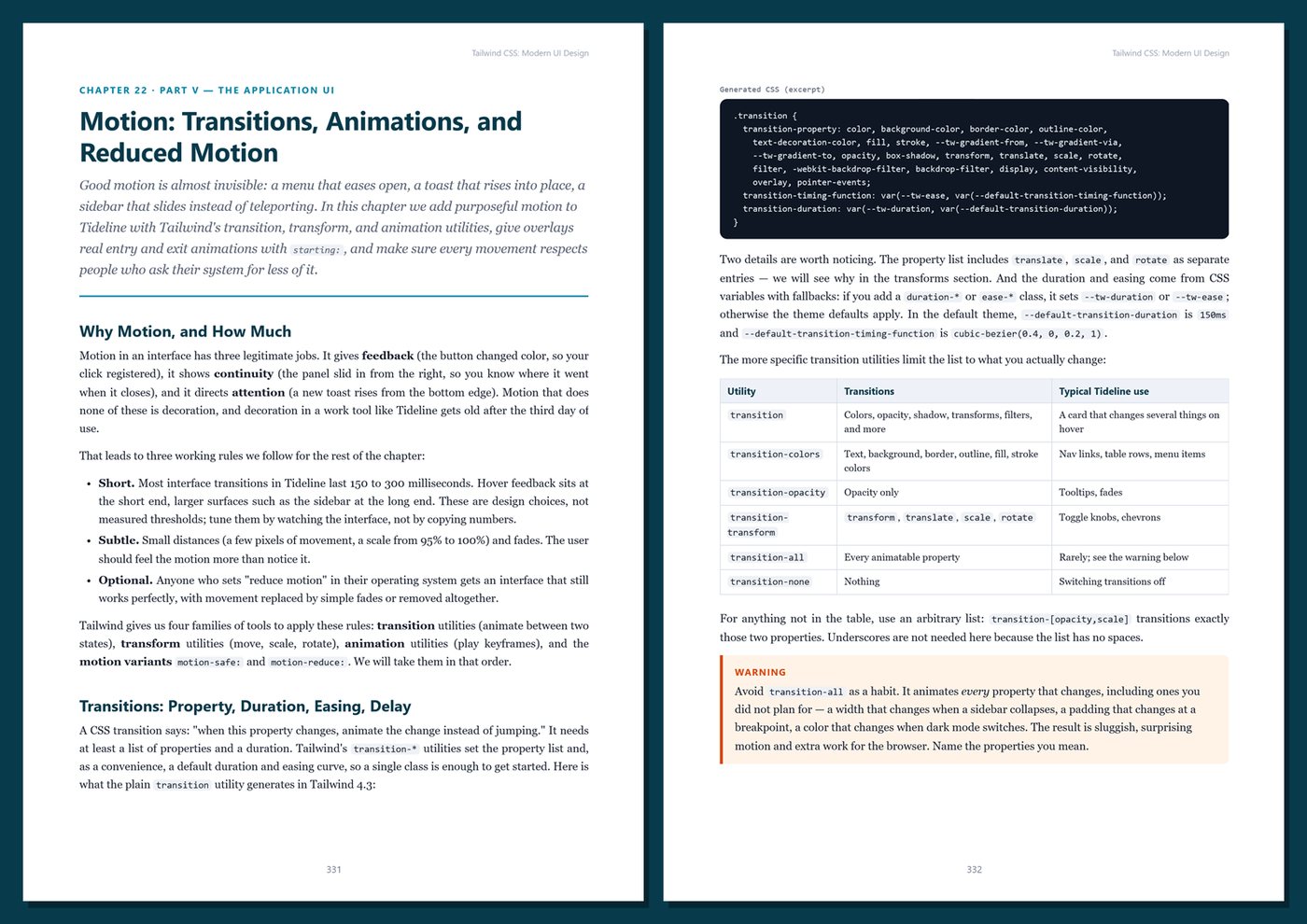
- Motion, accessibility (focus, contrast, screen readers, reduced motion, forced colors), and Tailwind in React and Vue components
- Production skills: readable class lists with Prettier, source detection, minified builds, browser support, and migrating from v3 to v4
One running example, start to finish. You build the interface for Tideline, a fictional software product for small creative agencies: a marketing site with a landing page, pricing page, and sign-up and log-in screens, and an application dashboard with a sidebar, key numbers, a weekly hours chart, project and invoice tables, forms, modals, and notifications. Every screen shares the same brand tokens, copy, and sample data, so the pieces come together as one coherent product.
Current and honest. The examples target Tailwind CSS v4 and were checked by building them with the v4.3 command-line tool and rendering the results in a browser. Older v3 syntax is clearly marked as legacy and covered in a dedicated migration chapter. The book contains no invented benchmarks or statistics. Every chapter includes complete code, Tips, Notes, Warnings, exercises, and Key Takeaways, and the appendices give you a cheat sheet, copy-ready templates, a production checklist, and a glossary.
Format: PDF, 461 pages (A4), linked table of contents and bookmarks. English. First Edition, 2026. Published by thenexbooks. This book is independent and is not affiliated with, sponsored by, or endorsed by Tailwind Labs Inc.
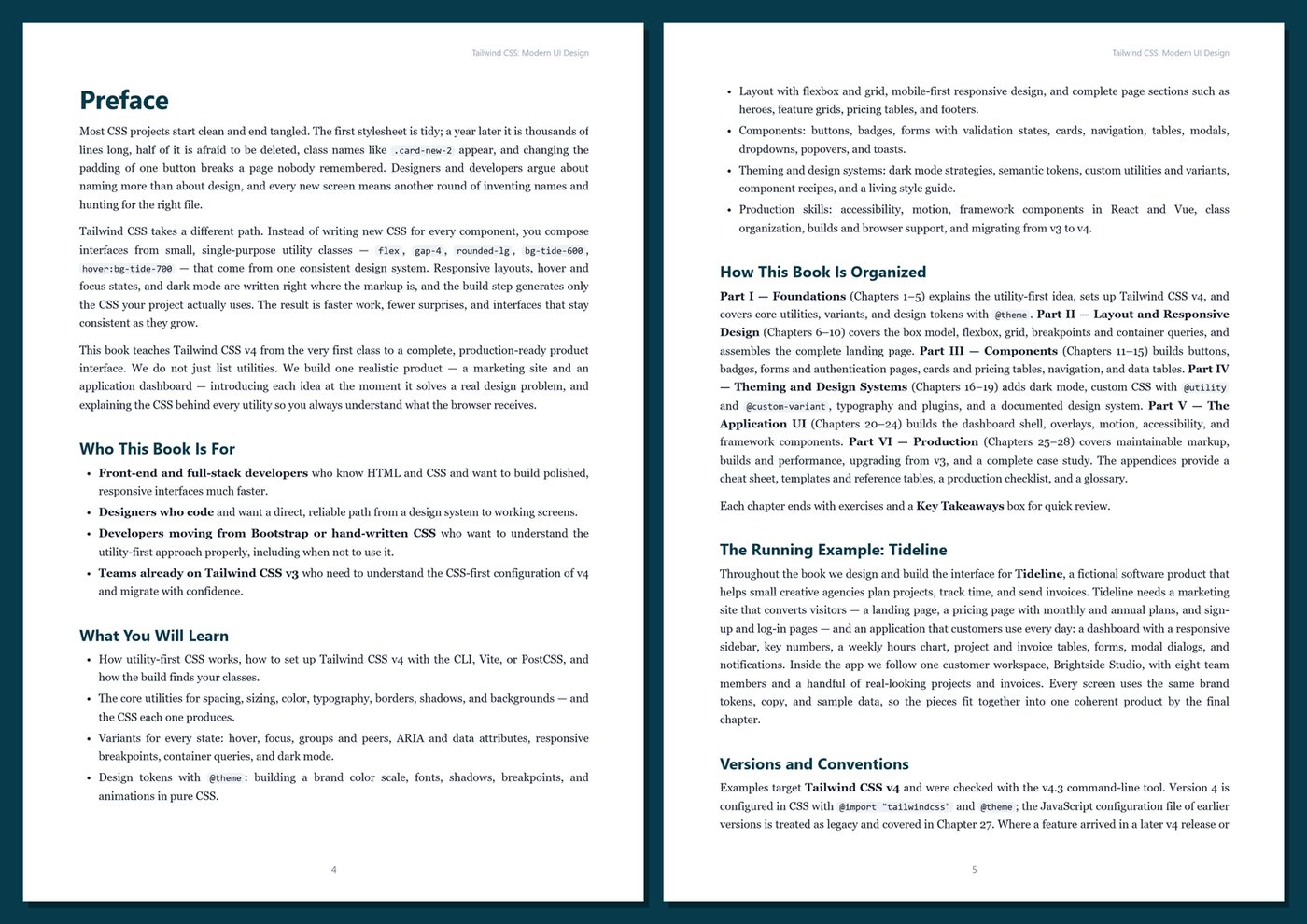
Table of Contents
Part I — Foundations
- Ch 1 · Why Utility-First? How Tailwind CSS Thinks
- Ch 2 · Setting Up Tailwind CSS v4: The CLI, Vite, and Your First Build
- Ch 3 · Core Utilities: Spacing, Sizing, Color, and Typography
- Ch 4 · Variants and States: Hover, Focus, Responsive, and Beyond
- Ch 5 · Design Tokens with @theme: Building the Tideline Brand
Part II — Layout and Responsive Design
- Ch 6 · The Box Model in Utilities: Borders, Radius, Shadows, and Backgrounds
- Ch 7 · Flexbox Layouts: Alignment, Spacing, and Real Patterns
- Ch 8 · Grid Layouts: Columns, Spans, and Page Structure
- Ch 9 · Responsive Design: Mobile-First Breakpoints and Container Queries
- Ch 10 · Building the Landing Page: Hero, Features, Testimonials, and Footer
Part III — Components
- Ch 11 · Buttons, Links, and Badges: Your First Reusable Patterns
- Ch 12 · Forms and Auth Pages: Inputs, Validation States, and Accessible Labels
- Ch 13 · Cards, Pricing Tables, and Feature Grids
- Ch 14 · Navigation: Navbars, Mobile Menus, Tabs, and Breadcrumbs
- Ch 15 · Tables, Lists, and Data Display
Part IV — Theming and Design Systems
- Ch 16 · Dark Mode: Strategies, Variants, and a Theme Switcher
- Ch 17 · Extending Tailwind in CSS: @utility, @custom-variant, @layer, and @apply
- Ch 18 · Typography, Rich Content, and Plugins
- Ch 19 · Building a Design System: Semantic Tokens, Component Recipes, and Documentation
Part V — The Application UI
- Ch 20 · The Dashboard Shell: Sidebar, Top Bar, and Responsive App Layout
- Ch 21 · Overlays: Modals, Dropdowns, Popovers, and Toasts
- Ch 22 · Motion: Transitions, Animations, and Reduced Motion
- Ch 23 · Accessible Interfaces: Focus, Contrast, ARIA Variants, and Screen Readers
- Ch 24 · Tailwind with Components: React, Vue, and Class Variants
Part VI — Production
- Ch 25 · Clean, Maintainable Markup: Class Order, Prettier, and Avoiding Class Soup
- Ch 26 · Builds and Performance: Source Detection, Minification, and Browser Support
- Ch 27 · Upgrading and Migrating: From v3 to v4 and Beyond
- Ch 28 · Case Study: Shipping the Complete Tideline Site and Dashboard
Appendices
A · Tailwind CSS Cheat Sheet
B · Templates and Reference
C · Production Checklist
D · Glossary
Book details
| Detail | |
|---|---|
| Pages | 461 |
| Format | PDF (A4) |
| Language | English |
| Level | Beginner to Intermediate |
| Edition | 1st Edition (2026) |
| Download on this site | Free sample, first 20 pages (PDF) |
| Publisher | thenexbooks |
Files you get
No reviews yet. Only buyers can review.
More from thenexbooks